

Stress and gut health are more connected than most people realize — when you’re stressed, your body triggers a fight-or-flight response that pulls blood and energy away from digestion and disrupts the nerves, hormones, and bacteria that keep your gut running smoothly. Over time, that connection between stress and gut health shows up as bloating, irregular bowel habits, stomach pain, and IBS-like flare-ups.
The good news? Because the gut and brain are so tightly wired together, calming your nervous system can genuinely calm your stomach too.
If you’ve been Googling “why does my stomach hate me lately” at 11pm, you’re not imagining things. And you’re definitely not alone.
Key Takeaways
- Stress and gut health are directly linked through the gut-brain axis, a two-way communication system between your brain and digestive tract.
- Chronic stress can slow or speed up digestion, increase gut permeability (“leaky gut”), and shift the balance of bacteria in your microbiome.
- Common signs stress is affecting your gut include bloating, constipation or diarrhea (sometimes both, annoyingly), stomach cramping, and new food sensitivities.
- Healing isn’t about a “gut reset” supplement — it’s mostly about calming your nervous system, eating in a way that doesn’t add fuel to the fire, and being consistent for weeks, not days.
- See a doctor if symptoms are severe, sudden, or include blood, unexplained weight loss, or waking you up at night — those need a real diagnosis, not a blog post.
Can Stress Really Cause Stomach Problems?
Short answer: yes, and it’s not “all in your head” — even though your head is very much involved.
Your gut has its own nervous system, sometimes called the “second brain” or, more formally, the enteric nervous system. It contains somewhere around 500 million neurons [Peer-reviewed source on enteric nervous system neuron count], which is more than you’d expect for an organ mostly known for digesting burritos.
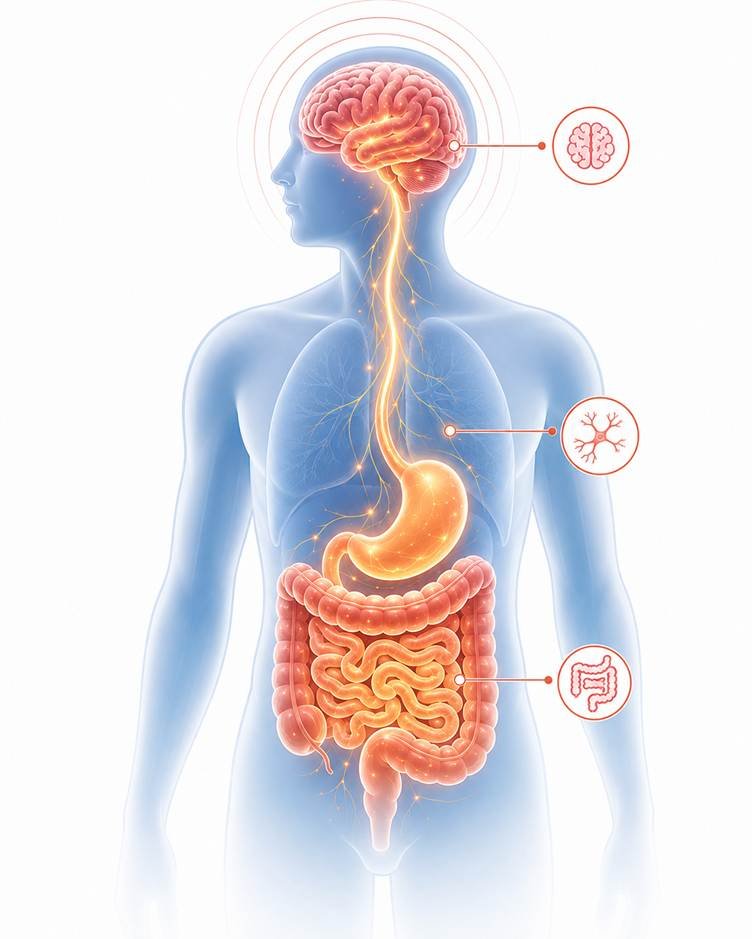
That gut-brain connection runs both ways. Your brain sends stress signals down to your gut, and your gut sends signals back up — which is part of why anxiety can feel like it lives in your stomach. When you’re stressed, your body releases cortisol and adrenaline, shifts blood flow away from digestion, and can literally change how fast (or slow) food moves through your system [Study on cortisol’s effect on gastric motility].
This is why some people get diarrhea before a big presentation and others get constipated during a stressful month at work. Same root cause, different plumbing response.
What Is the Gut-Brain Axis?
The gut-brain axis is the direct communication line between your central nervous system (brain and spinal cord) and your enteric nervous system (the nerves lining your gut), connected mainly through the vagus nerve.
Think of the vagus nerve as the phone line between your brain and your belly. It’s constantly relaying information — how full you are, what’s going on with your gut bacteria, whether things are calm or chaotic. When you’re chronically stressed, that line gets noisy. Signals get crossed. Your brain starts interpreting normal digestive sensations as threats, which is part of why stressed people report more gut pain even when nothing is structurally wrong [Research on visceral hypersensitivity and stress].
Your gut microbiome — the trillions of bacteria living in your digestive tract — is part of this loop too. Some researchers estimate that a huge portion of your body’s serotonin, the neurotransmitter tied to mood, is actually produced in the gut, not the brain [Verified statistic on gut-produced serotonin]. So when your gut is out of balance, it’s not just your stomach that notices.
5 Ways Stress Damages Your Gut Health
Here’s where the actual damage happens — not in some abstract “stress is bad” way, but through specific, traceable mechanisms.
1. It Slows Down (or Speeds Up) Digestion
Stress hormones tell your body to prioritize survival over digestion. Makes sense if you’re being chased by something. Less useful when the “threat” is a Slack notification.
This can mean food sits in your stomach longer than it should, leading to bloating and that heavy, sluggish feeling after meals. Or it can swing the other way — stress can also speed up transit time through your colon, which is a big part of why stress-related diarrhea is so common.
2. It Increases Gut Permeability

You’ve probably heard the term “leaky gut” thrown around, usually attached to a $60 supplement. The actual science is less dramatic but still real: chronic stress can weaken the tight junctions between cells in your intestinal lining, making it easier for bacteria and toxins to slip through where they shouldn’t [Study on stress and intestinal permeability].
I’ll be honest — I think the wellness internet has turned “leaky gut” into a catch-all diagnosis for basically any symptom, and that’s not fair to the actual research. It’s a real, measurable phenomenon, not a mystical explanation for every bad day.
3. It Throws Off Your Gut Microbiome

Chronic stress can shift the ratio of beneficial to harmful bacteria in your gut, sometimes called dysbiosis. Animal studies have shown that stress exposure can reduce microbial diversity within days [Study on stress-induced changes to gut microbiota]. Less diversity generally means a less resilient gut — one that struggles more with inflammation, digestion, and even mood regulation.
4. It Ramps Up Gut Inflammation

Stress triggers the release of inflammatory compounds called cytokines. In small, short-term doses, that’s a normal part of your immune response. But when stress is chronic — the kind that doesn’t let up for months — that low-grade inflammation can stick around in the gut lining, contributing to symptoms like cramping, bloating, and irregular bowel movements [Research on chronic stress and gut inflammation markers].
5. It Triggers or Worsens IBS Symptoms
If you already have irritable bowel syndrome (IBS), stress is one of the most consistent flare triggers there is. It doesn’t cause IBS on its own, but it absolutely makes existing symptoms worse, and it can lower your pain threshold for normal gut sensations [Clinical guideline on stress as an IBS symptom trigger].
This is genuinely one of the more frustrating parts of IBS — you can eat the exact same “safe” meal on a calm Tuesday and a chaotic Thursday and get two completely different digestive outcomes.
Signs of a Stress and Gut Health Problem
Not every stomach issue is stress-related, but a few patterns are pretty telling:
- Symptoms track with your calendar. Flares show up around deadlines, conflict, or big life changes, not random days.
- Bloating shows up even on “clean” eating days. You didn’t change your diet, but your stomach still puffed up like you ate a whole pizza.
- Your bowel habits are inconsistent. Constipation one week, looser stools the next, with no clear dietary trigger.
- You get stomach symptoms alongside anxiety or racing thoughts — tight chest, clenched jaw, and a churning gut, all at once.
- Eating feels different when you’re rushed or distracted versus when you’re relaxed and actually sitting down for a meal.
If a few of these sound familiar, your gut probably isn’t broken. It’s reacting to a nervous system that’s been in overdrive for a while.
How to Start Healing Your Stress and Gut Health Connection

This isn’t a 3-day reset. It’s more like retraining a system that’s been on high alert for months, maybe years. Give it real time — think weeks, not a weekend.
- Work on your nervous system first, not just your diet. Slow breathing, short walks after meals, and even a few minutes of doing nothing on purpose can lower the stress signals reaching your gut [Study on diaphragmatic breathing and vagal tone].
- Eat slower, and actually sit down for it. Digestion starts before food even hits your stomach — chewing and a relaxed state trigger the “rest and digest” response that stress shuts off.
- Support your microbiome with fiber diversity, not just one “gut health” food. A mix of vegetables, legumes, and whole grains feeds a wider range of bacteria than any single supplement will.
- Watch caffeine and alcohol during high-stress stretches. Both can irritate an already-sensitive gut lining and make stress symptoms feel worse, not better.
- Prioritize sleep, since poor sleep raises cortisol and directly worsens next-day gut symptoms — even one bad night can measurably shift gut sensitivity [Research linking sleep deprivation to next-day GI symptoms].
- Talk to a doctor if symptoms are persistent or severe. Ongoing digestive issues deserve a proper workup to rule out other causes before you assume it’s “just stress.”
[Internally link to: our guide on stress management techniques for anxiety] [Internally link to: our overthinking and rumination article]
I’ll add one pushback here: a lot of gut health advice online skips straight to supplements — probiotics, digestive enzymes, powders — before addressing the stress itself. Supplements aren’t useless, but if you’re still running on four hours of sleep and back-to-back meetings, no probiotic is going to out-perform your nervous system.
When to See a Doctor
Most stress-related gut symptoms are uncomfortable but not dangerous. That said, some symptoms need medical attention, not a lifestyle tweak:
- Blood in your stool
- Unexplained weight loss
- Symptoms that wake you up at night
- Severe or worsening pain
- Digestive changes that last more than a few weeks without improvement
A doctor can rule out conditions like celiac disease, inflammatory bowel disease, or other issues that share symptoms with stress-related digestive trouble. Please don’t self-diagnose your way past something that needs an actual test.
FAQ
Can stress alone cause IBS?
Stress doesn’t appear to cause IBS by itself, but it’s one of the most common triggers for flare-ups in people who already have it, and research suggests it can lower the gut’s pain threshold [Source on stress and IBS symptom severity].
How long does it take for a stressed gut to feel better?
It varies from person to person. Some dietary changes for IBS may need to be followed for several weeks before you can tell whether they are helping. NIDDK — Eating, Diet & Nutrition for IBS
What does gut-related anxiety feel like?
It often shows up as a tight, churning, or “nervous” stomach feeling, sometimes paired with nausea, loss of appetite, or an urgent need to use the bathroom — this is the gut-brain axis in action.
Can stress cause bloating without eating anything unusual?
Yes. Stress alone can slow digestion and change gut motility enough to cause bloating, even on days when your diet hasn’t changed at all.
Is leaky gut a real medical condition?
Increased intestinal permeability is a real, studied phenomenon linked to stress and other factors, though “leaky gut syndrome” as a stand-alone diagnosis isn’t formally recognized by most medical bodies — talk to a doctor if you’re concerned about symptoms.