
Yes — a digital detox can improve your mental health, but not because your phone is evil. Cutting back on screens, especially social media and email, may improve some aspects of mental health. Experimental research has found that reducing social-media use can improve well-being and reduce symptoms of depression and anxiety. Lambert et al. (2022) — PubMed. The catch is that “just take a break” rarely works — you need a plan that fits your actual job and life, not a weekend at a cabin with no Wi-Fi.
If you’ve ever put your phone in another room and felt an actual pull to go get it, you already know something’s off. You’re not weak. You’re responding exactly the way your brain was designed to respond to a device built to be checked constantly.
Key Takeaways
- A digital detox — a planned reduction in screen and social media use — has been associated with improvements in some mental-health outcomes, although results vary across outcomes and studies. Ansari et al. (2024) — Digital Detox Meta-analysis.
- Even reducing social-media use substantially may improve well-being and depressive symptoms over a relatively short intervention period. Hunt et al. (2018) — No More FOMO.
- Signs you need a detox include checking your phone within 5 minutes of waking, phantom vibration sensations, and feeling anxious when your phone battery drops below 20%.
- A realistic plan for working professionals uses “friction,” not willpower — app limits, notification cuts, and phone-free zones you set up once and forget about.
- If anxiety or sleep problems are severe or ongoing, talk to a doctor or therapist. A digital detox helps, but it’s not a substitute for treatment.
What Is a Digital Detox, Exactly?
A digital detox is a set period of time where you deliberately cut back on using phones, social media, or other screens. It’s not about throwing your laptop in a lake. Most versions people actually stick with involve targeted cuts — no phone for the first hour of the day, no social media after 9 PM, email off on weekends — rather than a total blackout.
The term gets thrown around loosely, so here’s the more useful way to think about it: a digital detox is any structured attempt to reduce compulsive or low-value screen use so you can reclaim attention, sleep, and downtime. “Compulsive” is the key word. Checking your phone to confirm a meeting time isn’t the problem. Opening Instagram for the eleventh time in an hour, without deciding to, is.
I’ll be honest — I think the wellness industry oversells the “30-day detox” concept. Most people don’t need a month off their phone. They need to fix three or four specific habits that are quietly wrecking their sleep and attention span. That’s a much less dramatic story, but it’s the one that actually works.
Does Reducing Screen Time Actually Reduce Anxiety?

For a lot of people, yes — though the relationship is more specific than “screens = bad.” Research points to a few mechanisms that connect screen use, and especially social media use, to anxiety:
- Social comparison. Scrolling through curated representations of other people’s lives can contribute to social comparison, which has been associated with poorer psychological outcomes. Relevant research on social media and social comparison.
- Notification-driven stress. Constant pings train your nervous system to stay in a low-grade “alert” state, which can raise cortisol and make it harder to relax.
- Sleep displacement. Screen use before bed, particularly interactive or stimulating use, can be associated with delayed sleep and poorer sleep outcomes. Carter et al. (2016) — Screen-based media devices and sleep.
- Attention fragmentation. Task-switching between apps and work tabs increases mental fatigue, which can look and feel like anxiety even when it’s really just an overloaded working memory.
None of this means every anxious feeling traces back to your phone. But if you notice your chest tightening after a scroll session, or you feel more on-edge on days you’re glued to Slack, that’s not a coincidence — it’s a documented pattern, and it responds well to structural changes.
Internally link to: Mental Health & Stress pillar page on managing workplace anxiety
Signs You Need a Digital Detox
You probably don’t need a psychologist to tell you this one — your body’s already telling you. Here are the signs that show up most often in people who’d benefit from cutting back:
- You reach for your phone within 5 minutes of waking up, before you’ve even used the bathroom.
- You feel a small spike of anxiety when your phone is out of reach or the battery’s low.
- You’ve experienced “phantom vibrations” — feeling your phone buzz when it didn’t.
- You scroll social media without deciding to, and don’t remember opening the app.
- Your sleep has gotten worse in the last 6–12 months, and it lines up with more screen time before bed.
- You feel mentally “full” or foggy by early afternoon, even on days with a light workload.
- You compare your life, body, or career to what you see online more than once a day.
If three or more of these sound familiar, that’s a decent signal your screen habits are working against you, not for you. You don’t need all seven to justify making a change.
How to Do a Digital Detox as a Working Professional

Here’s where most advice falls apart. You can’t just “turn off your phone” when your job runs through Slack, email, and video calls. A detox plan for a working professional has to work around your job, not pretend it doesn’t exist. This is a step-by-step structure that’s realistic for someone with a 9-to-5 (or busier):
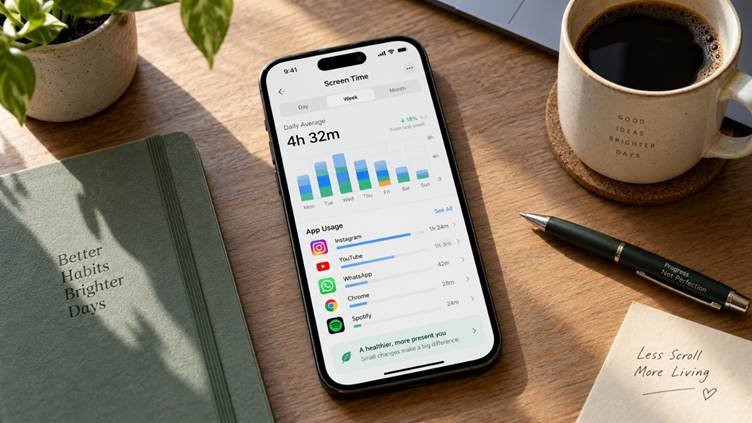
- Audit your actual screen time for 3 days. Use your phone’s built-in screen time tracker before changing anything. You need a baseline, and most people underestimate their use by an hour or more.
- Pick two “dead zones.” Choose two specific times of day — commonly the first 30–60 minutes after waking and the last 30–60 minutes before bed — where the phone stays out of the bedroom entirely.
- Turn off non-human notifications. Keep texts and calls. Kill push notifications for social apps, news, games, and shopping apps. This single step tends to cut compulsive checking more than any willpower-based rule.
- Batch email and Slack instead of leaving them open. Check at set times — say, 9 AM, 1 PM, and 4:30 PM — rather than letting them run in the background all day. Constant partial attention is exhausting in a way that’s easy to underestimate.
- Use app timers, not app deletion. Deleting apps often leads to reinstalling them within a week. A daily time limit (30–45 minutes for social apps is a common starting point) keeps the app usable but breaks the mindless-scroll pattern.
- Replace, don’t just remove. Pick one low-effort offline activity for the time you free up — a short walk, five minutes of stretching, texting a friend instead of scrolling their posts. An empty gap tends to get refilled with the same habit.
- Review after two weeks. Check your screen time numbers again. Adjust the rules that didn’t stick and keep the ones that did. This isn’t a one-time fix — it’s more like adjusting a diet than flipping a switch.
Notice there’s no step that says “quit social media forever.” For most working professionals, that’s not realistic, and unrealistic plans don’t survive contact with a Monday morning inbox.
What Are the Real Benefits of a Digital Detox?

Beyond “you’ll feel better” — which is true but vague — here’s what tends to show up when people cut back on screens for a few weeks:
- Better sleep quality. Less screen exposure before bedtime may help reduce sleep disruption, particularly when screen use is replaced with non-screen activities. Carter et al. (2016) — Screen-based media devices and sleep.
- Lower background anxiety. Fewer notifications means fewer small stress spikes throughout the day, which adds up.
- Improved focus. Reducing app-switching gives your working memory fewer interruptions to recover from, which can improve concentration on deep work.
- More real-world connection. Time that was going into passive scrolling often gets redirected into actual conversations, which tend to do more for mood than a feed ever will.
- Reduced comparison spiraling. Less exposure to curated content from others correlates with steadier self-esteem over time.
I’ll add my honest take here: the sleep benefit is usually the biggest and fastest one people notice — often within a week — while the anxiety and focus benefits tend to show up more gradually, over 3–4 weeks. If you go into a detox expecting instant calm, you might get discouraged before the real payoff shows up.
When a Digital Detox Isn’t Enough
A digital detox is a solid tool, not a cure-all. If your anxiety is intense, constant, or interfering with work and relationships regardless of your screen habits, that’s worth bringing to a doctor or therapist. The same goes for sleep problems that don’t improve after a few weeks of cutting evening screen time — there may be something else going on, like an underlying sleep disorder or anxiety condition that needs its own treatment.
Screens can absolutely make anxiety and poor sleep worse. They’re rarely the entire story. Treat a digital detox as one lever among several — alongside sleep habits, movement, and, when needed, professional support.
Suggested external links: the American Psychological Association’s research on social media and mental health and the CDC’s guidance on screen time and sleep for authoritative backup on these claims once verified.
FAQ
Does a digital detox really work, or is it just a trend?
It’s not just a trend — There is research examining digital-detox interventions, although the effects differ depending on the mental-health outcome measured. Ansari et al. (2024) — Digital Detox Meta-analysis. That said, results vary by person, and a loosely followed detox won’t do much. Structure matters more than duration.
How long should a digital detox last?
There’s no single right length. Many people see initial changes in sleep within a week and mood changes within 3–4 weeks. A short, sustainable set of daily rules tends to beat a dramatic one-week total blackout that you abandon on day 8.
Can a digital detox help with work-related anxiety specifically?
It can help with the piece of anxiety driven by constant notifications and after-hours availability. It won’t fix a genuinely toxic workload or unreasonable manager — those need their own solutions.
Do I need to delete social media apps to see benefits?
No. App timers and notification cuts tend to work better long-term than deletion, since most people reinstall deleted apps within days. Reducing compulsive use matters more than total abstinence for most people.
Is it normal to feel anxious during the first few days of cutting back?
Yes, mild restlessness or the urge to check your phone in the first few days is common and usually fades within a week as the habit loop weakens.