
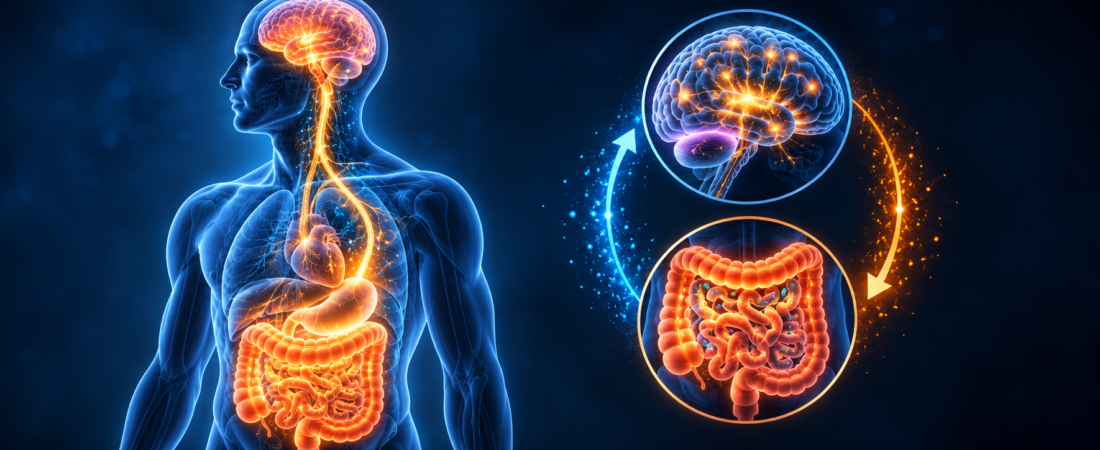
Short answer: yes, and it’s not “all in your head.” Stress triggers real, measurable changes in your gut — slower or faster digestion, more inflammation, a shift in gut bacteria, and a nervous system that’s stuck signaling “danger” to your digestive tract. If you’ve had unexplained bloating, cramping, or IBS-like flares during a stressful stretch of life, there’s a physiological reason, not just a coincidence.
Key Takeaways
- Your gut and brain communicate constantly through the vagus nerve and shared nervous system pathways — this is called the gut-brain axis.
- Chronic stress raises cortisol, which can slow or speed digestion, increase gut permeability, and disrupt your microbiome.
- Stress-related gut symptoms tend to show up in patterns — flaring during deadlines, easing on vacation, worse with certain triggers — which is a useful clue.
- First steps that may help: vagus nerve exercises, slower eating, consistent meal timing, and basic stress management (more on this below).
- This isn’t a substitute for medical care. Persistent or severe symptoms need a doctor’s evaluation to rule out other causes.
If you’ve ever had a big presentation and felt your stomach twist into knots beforehand, you already know this connection exists. You just didn’t know there was a name for it.
What Is the Gut-Brain Axis?
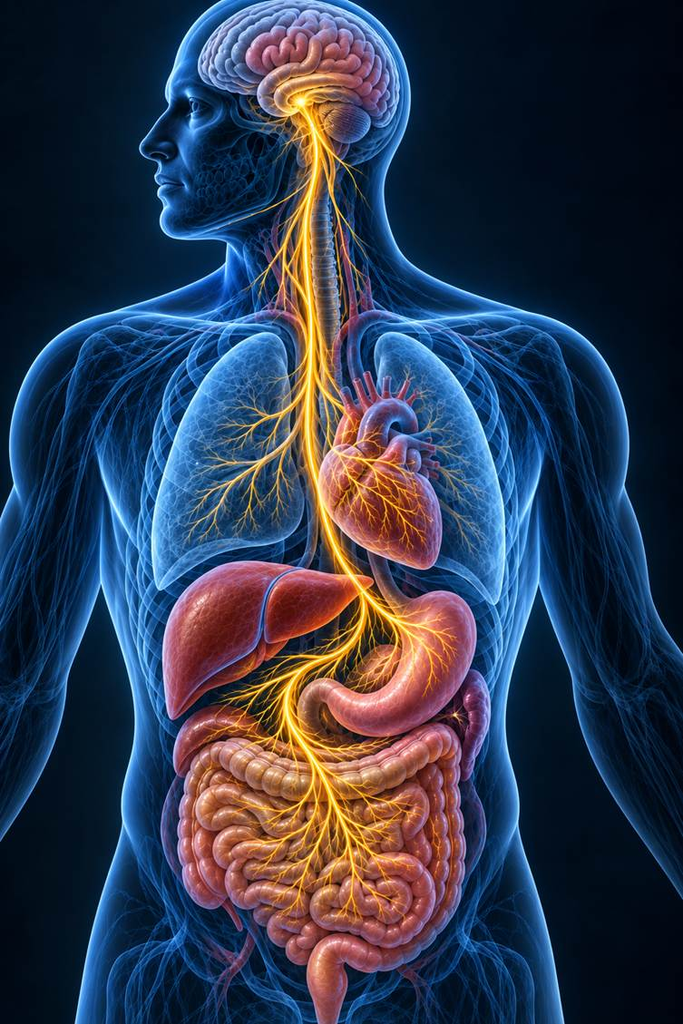
The gut-brain axis is the two-way communication system linking your brain and your digestive tract. It’s not a metaphor — it’s a physical network of nerves, hormones, and immune signals running in both directions.
The main highway is the vagus nerve, a long nerve that runs from your brainstem down through your neck, chest, and abdomen, connecting to your heart, lungs, and gut. About 80-90% of the signals traveling along it go from the gut up to the brain, not the other way around. In plain terms: your gut is talking to your brain more than your brain is talking to your gut.
There’s also a chemical layer to this. Your gut produces the majority of the body’s serotonin — somewhere around 90-95%, depending on the source you check. Serotonin affects mood, sure, but in the gut it also regulates motility, meaning how fast or slow food moves through your system. That’s one reason anxiety and digestive symptoms so often show up together — they’re running on some of the same chemical wiring.
I’ll be honest: I think the “gut-brain axis” gets thrown around so much in wellness content that it’s started to sound like a buzzword instead of what it actually is — a real, well-documented physiological system. That doesn’t mean every gut issue is stress-related. But it does mean the connection deserves more credit than a lot of people give it.
How Does Stress Affect Digestion?

When you’re stressed, your body shifts into what’s commonly called “fight or flight” mode, run by the sympathetic nervous system. This is useful if you’re actually in danger. It’s less useful when the “threat” is a overflowing inbox.
Here’s what tends to happen physically:
- Blood flow redirects away from digestion. Your body prioritizes muscles and heart rate over breaking down food, so digestion slows.
- Cortisol rises. This stress hormone can alter gut motility (how fast things move), increase acid production, and change gut permeability.
- Gut bacteria shift. Chronic stress has been linked to changes in the diversity and balance of gut microbiota.
- Muscle tension increases. This includes the smooth muscle in your digestive tract, which can contribute to cramping or that “tight” stomach feeling.
- Gut sensitivity increases. Stress can lower your pain threshold for normal digestive sensations, so gas or bloating that you’d normally shrug off suddenly feels a lot worse.
Notice that none of this requires you to have an underlying digestive disease. A perfectly healthy gut can still misbehave under enough sustained pressure. That’s the part people miss — they assume something must be “wrong” with their gut, when really, it’s responding exactly the way a stressed nervous system tells it to.
Chronic Stress and Gut Health: Why Long-Term Stress Is Worse Than a Bad Day

A single stressful event — a fight with your partner, a scary phone call — usually causes short-term symptoms that resolve once you calm down. Chronic stress is a different animal.
When stress becomes constant (think: months of a toxic job, financial strain, or caregiving burnout), your body stays in a low-grade activated state. The HPA axis — short for hypothalamic-pituitary-adrenal axis, the system that controls your cortisol release — doesn’t get the “all clear” signal it needs to reset [Overview source on HPA axis dysregulation under chronic stress].
Over time, this has been associated with:
- Increased intestinal permeability, sometimes referred to informally as “leaky gut” (a legitimate physiological concept, though the term is often overused or misapplied in wellness marketing)
- Higher inflammation markers in the gut lining [Study linking chronic stress to gut inflammation markers]
- Disrupted sleep, which independently worsens digestive symptoms
- Changes in appetite and food choices — stress eating or stress under-eating, both of which affect gut function
This is also why stress-related gut issues rarely show up in isolation. They tend to travel with poor sleep, anxiety, and sometimes changes in weight. If you’re dealing with one of these, it’s worth checking whether the others are quietly stacking up too. [Internally link to: Mental Health & Stress pillar — chronic stress management article]
Signs Your Gut Problems Are Stress-Related
You can’t diagnose yourself with certainty — that’s what doctors are for — but there are patterns worth paying attention to.
Stress-related gut symptoms often:
- Flare during predictable stress windows — before work presentations, during finals week, around family visits
- Ease up during genuine downtime, like the first few days of a relaxing vacation
- Come with other stress symptoms — tension headaches, jaw clenching, trouble sleeping, racing thoughts
- Don’t correlate cleanly with specific foods, even though you might blame food first
- Improve somewhat with relaxation techniques, even briefly, which is a meaningful clue
- Include a mix of symptoms rather than just one — bloating plus urgency plus nausea, for example, rather than one isolated symptom
If your symptoms are severe, involve blood, unexplained weight loss, or persist regardless of your stress levels, those are signs to see a doctor rather than assume it’s “just stress.” Stress can absolutely make existing conditions like IBS, IBD, or acid reflux worse, but it shouldn’t be the default explanation for every gut symptom without ruling other things out first.
What Actually Helps: First Steps for Stress-Related Gut Symptoms

I’m going to push back a little on the generic advice you’ve probably already read a hundred times (“just relax more!” isn’t exactly actionable). Here’s what tends to make a real, near-term difference:
Vagus nerve stimulation. Simple things like slow diaphragmatic breathing (in for 4 counts, out for 6-8), humming, or gargling can activate the vagus nerve and shift your body out of fight-or-flight [Study on vagal tone and slow breathing exercises]. This takes about two minutes and doesn’t require an app or a subscription.
Eating slower, on purpose. Digestion actually starts in your brain — the sight and smell of food trigger digestive enzymes before you even take a bite. Eating while distracted or rushed skips that step and can worsen bloating.
Consistent meal timing. Your gut has its own rhythm. Wildly inconsistent eating schedules — skipping meals when busy, then overeating later — adds another layer of stress on top of the one you’re already carrying.
Basic stress management, not perfection. You don’t need a two-hour meditation practice. A 10-minute walk without your phone, or five minutes of quiet before bed, genuinely counts. [Internally link to: Mental Health → Stress Management pillar]
Tracking patterns for two weeks. Before assuming stress is the cause, jot down symptoms alongside stress levels, sleep, and food for about 14 days. Patterns tend to jump out fast once it’s written down instead of just remembered.
None of this replaces medical evaluation if symptoms are persistent or severe. Talk to a doctor before starting any new supplement or major dietary change, especially if you have an existing digestive condition.

FAQ
Can anxiety alone cause stomach problems without any other condition?
Yes. Anxiety activates the same stress response pathways as other forms of stress, and can cause nausea, appetite changes, cramping, or altered bowel habits even without a separate digestive diagnosis.
How long does it take for stress-related gut symptoms to improve?
It varies a lot by person. Some people notice a difference within days of reducing acute stress; for chronic stress, it often takes several weeks of consistent lower stress and better sleep before gut symptoms meaningfully settle.
Is IBS caused by stress, or does stress just make it worse?
Stress doesn’t appear to be the sole cause of IBS, but it’s a well-documented trigger for flares in people who already have it [Source on stress as an IBS symptom trigger, not sole cause]. The underlying cause of IBS is thought to involve multiple factors, including gut sensitivity and microbiome composition.
Should I see a doctor for stress-related gut issues?
Yes, especially if symptoms are new, severe, involve blood, unexplained weight loss, or persist regardless of stress levels. A doctor can rule out other conditions before you settle on stress as the explanation.
Can fixing my gut health reduce my anxiety, not just the other way around?
There’s growing interest in this two-way relationship — some early research suggests gut health may influence mood through the same gut-brain pathways though this area is still developing and shouldn’t be treated as a guaranteed fix for anxiety.