
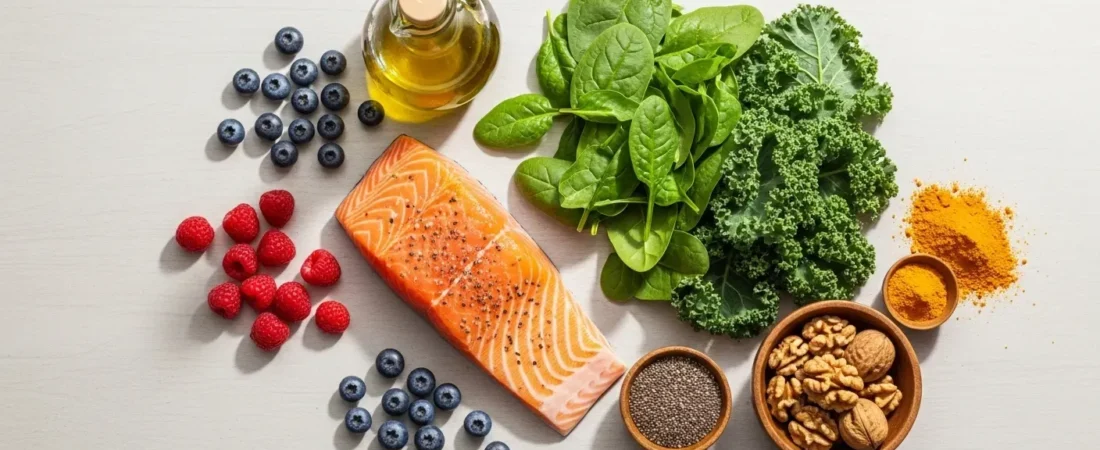
If your knees ache more than they should for your age, or you’re tired in a way sleep doesn’t fix, inflammation is probably part of the story. The fastest-acting anti-inflammatory foods — fatty fish, tart cherries, extra-virgin olive oil, leafy greens, ginger, turmeric with black pepper, and walnuts — work because they supply compounds your body uses to actively shut down inflammatory signals, not just avoid feeding them. Most people notice some difference within 1 to 3 weeks of eating these consistently, though joint pain relief can take longer.
This isn’t a detox. It’s not a 3-day fix. But it’s also not as slow as you’ve probably been told.
Key Takeaways
- Fatty fish, tart cherry juice, and extra-virgin olive oil show the most consistent short-term effects on inflammatory markers in research.
- Most anti-inflammatory foods need 2-4 weeks of regular eating before you’ll notice a real difference — anyone promising overnight results is selling something.
- Combining turmeric with black pepper, or olive oil with vegetables, dramatically improves how much your body actually absorbs.
- Diet alone won’t fix inflammation caused by an underlying condition. If pain or fatigue is persistent, talk to a doctor before assuming food will solve it.
- Consistency beats intensity — a mediocre anti-inflammatory diet eaten daily beats a perfect one you follow for a week and quit.
What Is Inflammation, and Why Does Food Affect It?
Inflammation is your immune system’s response to something it sees as a threat — an injury, an infection, or in a lot of modern cases, chronic low-grade stress from diet, poor sleep, or excess body fat.
There are two kinds worth knowing. Acute inflammation is the swelling around a sprained ankle — useful, temporary, and it goes away. Chronic inflammation is the quieter, longer-running kind that’s linked to joint pain, fatigue, autoimmune flare-ups, and a higher risk of heart disease over time. This second kind is what most people mean when they say “I think I have inflammation.”
Food affects both. Certain compounds — omega-3 fatty acids, polyphenols, and specific antioxidants — actively interfere with the chemical pathways your body uses to keep inflammation running. Other foods, especially heavily refined ones high in sugar and industrial seed oils, tend to feed the fire. [VERIFY SOURCE: Harvard T.H. Chan School of Public Health has published accessible summaries on diet and inflammation — worth linking here for E-E-A-T.]
None of this means food is a substitute for medical care. If you have a diagnosed inflammatory condition like rheumatoid arthritis, food is a support tool, not a treatment on its own.
The 7 Fastest Anti-Inflammatory Foods (Ranked by How Quickly They Work)
Here’s where I’ll push back on something you’ll read on a lot of wellness sites: there’s no food that fights inflammation in a single sitting. What these seven have going for them is that their effects show up faster and more measurably than most others, based on the research we do have.
1. Fatty Fish (Salmon, Sardines, Mackerel)
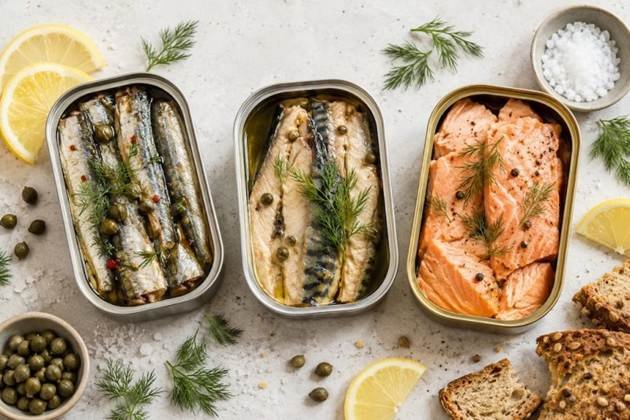
Fatty fish is the closest thing to a proven fast-acting anti-inflammatory food. The omega-3 fatty acids EPA and DHA get converted into compounds called resolvins and protectins, which your body uses to actively resolve inflammation — not just block it.
A 2023 review in a peer-reviewed nutrition journal found measurable drops in inflammatory markers like CRP (C-reactive protein, a blood marker doctors use to gauge inflammation levels) after consistent omega-3 intake over several weeks. [VERIFY SOURCE]
Practical target: 2-3 servings a week, roughly 3-4 ounces each. Canned sardines count and they’re cheap — don’t let “fresh salmon twice a week” become the reason you never start.
2. Tart Cherries (or Tart Cherry Juice)
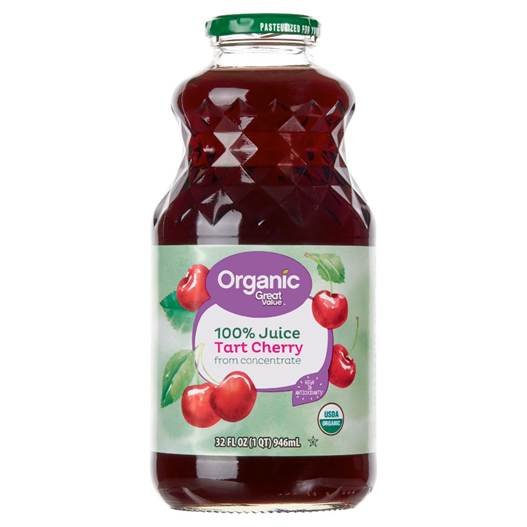
This one surprises people. Tart cherries — specifically Montmorency cherries — are one of the few foods with actual same-week research behind them for exercise-induced inflammation and joint discomfort.
Studies on athletes drinking tart cherry juice around intense exercise showed reduced muscle soreness and lower inflammatory markers within days, not weeks. [VERIFY SOURCE] If your inflammation is tied to overtraining or an old joint injury flaring up after activity, this is worth trying before reaching for another ibuprofen.
Go for unsweetened tart cherry juice or whole tart cherries — the sweet dessert cherries at the grocery store don’t have the same concentration of the anthocyanins doing the work here.
3. Extra-Virgin Olive Oil
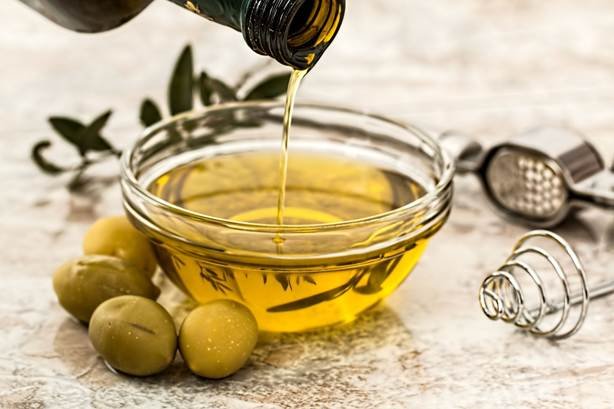
Extra-virgin olive oil contains a compound called oleocanthal, which works on some of the same inflammatory pathways as ibuprofen — just at a much gentler dose. That’s not marketing fluff; it’s a real, studied mechanism.
The catch: it has to be extra-virgin, not “light” or refined olive oil, and it should taste slightly peppery at the back of your throat — that’s the oleocanthal you’re tasting. If your olive oil tastes like nothing, it’s probably lost most of its punch.
How to use it fast: Swap your cooking oil for it, drizzle it raw over vegetables, or use it as your salad dressing base. Two to three tablespoons a day is a reasonable target.
4. Leafy Greens (Spinach, Kale, Swiss Chard)
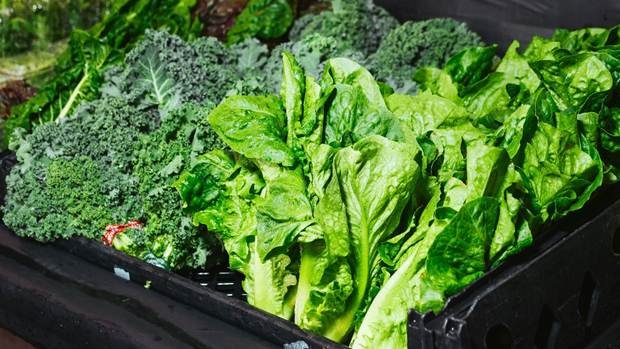
Leafy greens deliver a mix of antioxidants and vitamin K that help regulate inflammatory response, plus they’re one of the easiest wins on this list because you can add them to almost anything without changing how a meal tastes.
They work more gradually than fish or cherries, but the effect compounds — pun intended — the more consistently you eat them. Think of leafy greens as the base layer of an anti-inflammatory diet rather than the fast-acting fix.
A big handful (about 1-2 cups raw) daily is a reasonable, sustainable target.
5. Ginger
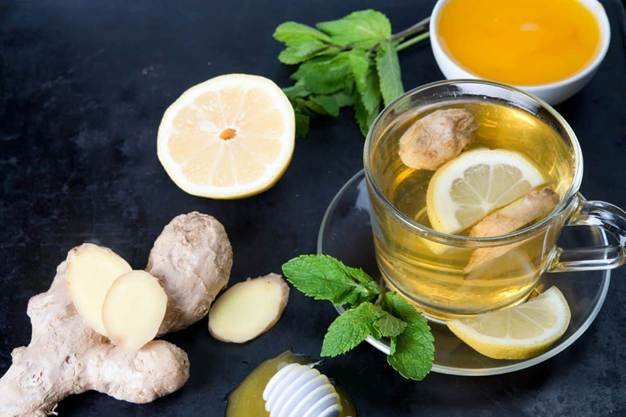
Ginger contains gingerol, a compound with a documented effect on inflammatory pathways, and it’s been used for joint pain and nausea for a very long time — long enough that modern research has actually gone back to check if the old advice held up. Mostly, it has.
A daily dose in the range of 1-2 grams (roughly half a teaspoon of fresh grated ginger, or a cup of strong ginger tea) is what most studies on joint discomfort have used. [VERIFY SOURCE]
If you’ve ever sipped ginger tea after a heavy meal and felt your stomach settle, that’s not placebo — ginger genuinely helps with gut inflammation too, which matters more than people realize since a lot of chronic inflammation starts in the gut.
6. Turmeric (With Black Pepper)
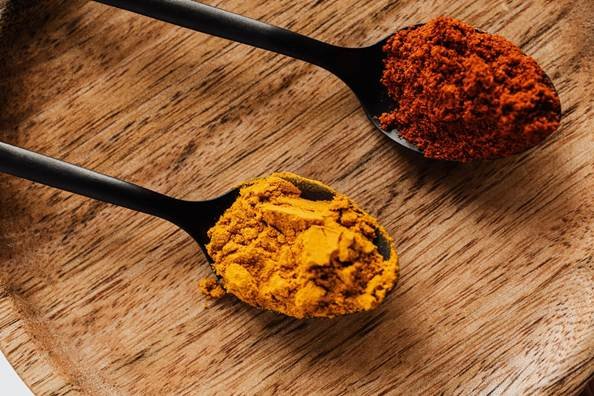
Turmeric gets the most hype of anything on this list, and honestly, some of it’s overblown. The active compound, curcumin, does have real anti-inflammatory properties — but on its own, your body absorbs very little of it.
This is the one non-negotiable pairing on this entire list: turmeric needs black pepper (specifically piperine, the compound that makes pepper spicy) to be absorbed properly. Research suggests piperine can increase curcumin absorption significantly. [VERIFY SOURCE] Turmeric lattes without black pepper are mostly just… warm milk.
Add a pinch of black pepper to turmeric in cooking, or look for a supplement that already includes piperine if you’re going that route.
7. Walnuts
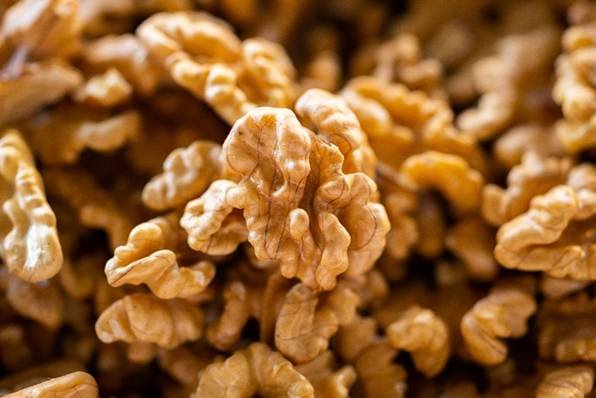
Walnuts are the only nut with a meaningful amount of ALA, a plant-based omega-3. They won’t outperform fatty fish, but if you’re vegetarian or just don’t eat much fish, walnuts are your best food-based alternative.
A small handful — about an ounce, or roughly 14 walnut halves — a few times a week is enough to matter. Don’t go overboard; they’re calorie-dense, and if body composition is part of your goal too, portion control still counts here. [Internally link to: body recomposition and calorie tracking article]
How Long Does It Actually Take to See Results?
This is the question nobody wants to answer honestly, so here it is straight:
- Days 1-7: Minimal noticeable change for most people, though tart cherry juice around exercise can show effects within days.
- Weeks 2-4: Many people report less morning stiffness, steadier energy, and fewer digestive symptoms.
- Weeks 4-8: This is where blood markers like CRP tend to show measurable improvement in studies, if the diet has been consistent.
- 3+ months: Joint pain and chronic symptoms, if diet-related, tend to show the clearest improvement here — not before.
If someone tells you a juice cleanse or a single “superfood” eliminated their inflammation in three days, be skeptical. That’s not how the biology works.
Foods That Work Against You (And Undo the Progress)
You can eat all seven foods above and still stay inflamed if the rest of your diet is working against you. The biggest offenders, based on current research:
- Refined sugar and high-fructose corn syrup — tied to elevated inflammatory markers even in otherwise healthy people.
- Industrial seed oils used in a lot of fried and processed food, when consumed in excess relative to omega-3s.
- Refined carbs (white bread, most packaged snacks) — they spike blood sugar, and blood sugar spikes are a known inflammatory trigger.
- Excess alcohol — occasional drinks aren’t the issue; regular heavy drinking is.
You don’t need to eliminate all of these forever. But if you’re loading up on anti-inflammatory foods while still eating fast food four times a week, don’t expect much movement.
Do You Need Supplements, or Is Food Enough?
For most people without a diagnosed condition, food-first is the right call, and it’s genuinely underrated compared to how much attention supplements get. [Internally link to: supplements & nutrition guide]
That said, some people — especially those with limited fish intake or diagnosed joint conditions — may benefit from an omega-3 or curcumin supplement on top of diet. This is a conversation for your doctor, not a blog post, especially if you’re on blood thinners or other medications, since omega-3s and turmeric can interact with them.
FAQ
What is the single fastest anti-inflammatory food? Tart cherry juice shows the fastest measurable effect, particularly for exercise-related inflammation, with some studies showing changes within days. For general chronic inflammation, fatty fish tends to show the most consistent results over a few weeks.
Can anti-inflammatory foods help with joint pain specifically? Research suggests fatty fish, tart cherries, and ginger may help reduce joint pain and stiffness over several weeks of consistent intake. They’re not a replacement for medical treatment if you have a diagnosed condition like arthritis — talk to a doctor about combining approaches.
How long before anti-inflammatory foods start working? Most people notice smaller changes, like less bloating or steadier energy, within 2 to 4 weeks. Measurable changes in inflammatory blood markers usually take 4 to 8 weeks of consistent eating, and joint pain relief can take longer than that.
Is turmeric or fish oil better for inflammation? They work differently, so it’s not really an either-or. Fish oil has stronger, more consistent research behind it for lowering inflammatory markers. Turmeric may help with joint discomfort specifically, but only if it’s paired with black pepper for absorption.
Can I get enough anti-inflammatory foods without eating fish? Yes, though it takes more intention. Walnuts, olive oil, leafy greens, ginger, and turmeric can form a solid plant-based anti-inflammatory diet — you’ll just want to make sure you’re getting ALA omega-3s from walnuts or flaxseed since plant-based omega-3s convert less efficiently than the kind found in fish.