

Becoming a dad changes your body and brain more than most guys expect. What health changes happen when you become a dad typically include hormonal shifts (a drop in testosterone, a rise in stress hormones), disrupted sleep that can last well past the newborn stage, weight gain from lifestyle changes rather than metabolism, and a real risk of depression and anxiety that gets missed because nobody’s screening dads for it. None of this means something’s wrong with you. It means your body is responding to one of the biggest life changes a human can go through.
If you’re three weeks into fatherhood, running on four hours of broken sleep, and wondering why you feel like a different person — you’re not imagining it. Keep reading.
Key Takeaways
- Testosterone typically drops in new fathers, sometimes by 20–30%, especially in the first few months [Study on testosterone decline in new fathers].
- Sleep loss is the biggest driver of most other symptoms — mood, weight, focus, libido. Fix sleep where you can, and a lot of other stuff improves on its own.
- Postpartum depression isn’t just a mom thing. Roughly 1 in 10 new dads experience it, and it often shows up as irritability or anger rather than sadness [Statistic on paternal postpartum depression prevalence].
- Weight gain in new dads is real and averages a modest but noticeable amount in the first year, driven mostly by less time to cook, exercise, and sleep — not some biological inevitability.
- You’re allowed to struggle. Asking for help — from a partner, a friend, or a doctor — isn’t a failure of manhood. It’s the opposite.
Why Nobody Warns Dads About This
Here’s something that bugs me: we spend nine months preparing moms for the physical reality of pregnancy and birth, and basically zero time preparing dads for what happens to them. You get a few jokes about diaper changes and sleepless nights, and that’s it. Meanwhile your hormones are shifting, your stress load has roughly tripled, and you’re expected to just… handle it.
That gap in preparation is a big reason so many new dads feel blindsided. You’re not weak for struggling with this. You were never told it was coming.
Hormonal Changes in New Fathers: What’s Actually Happening
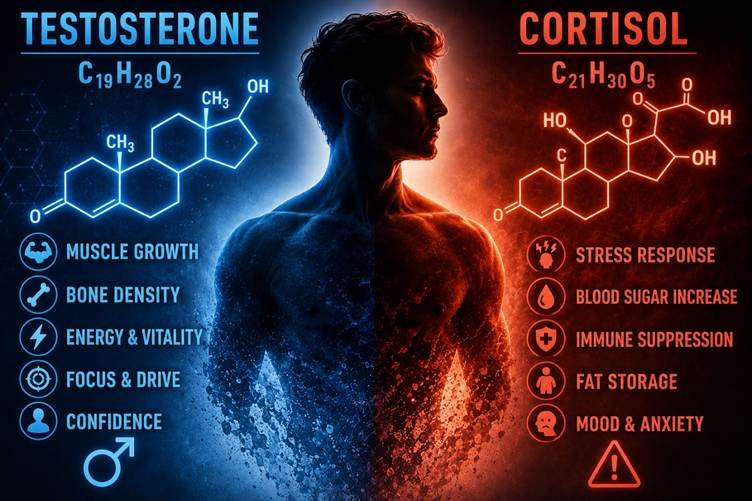
Yes, dads go through hormonal changes too — it’s just less talked about than the postpartum hormone crash moms experience.
Testosterone drops. Multiple studies have tracked this: men’s testosterone tends to fall in the weeks and months after their child is born, with some research showing declines of 20–30%. This isn’t random. Researchers think it’s an evolutionary shift — lower testosterone is linked to more nurturing behavior and less aggression, which, evolutionarily speaking, makes you a better caregiver and a less competitive mate-seeker [Research on testosterone and paternal caregiving behavior].
Cortisol goes up. Your stress hormone, cortisol, tends to rise with the chaos of new fatherhood — broken sleep, financial pressure, a crying baby you can’t always soothe. Chronically elevated cortisol is linked to weight gain around the midsection, worse sleep quality, and low mood.
Prolactin and oxytocin can rise too. These are usually thought of as “bonding hormones,” and some research suggests they increase in engaged fathers, which may explain why holding your baby skin-to-skin can genuinely calm you down, not just them.
What does this actually feel like day to day? Lower energy. Less interest in sex. A shorter fuse. If that sounds familiar, it’s not just “new dad stress” in some vague sense — there’s real biology behind it.
Signs of Postpartum Depression in Dads
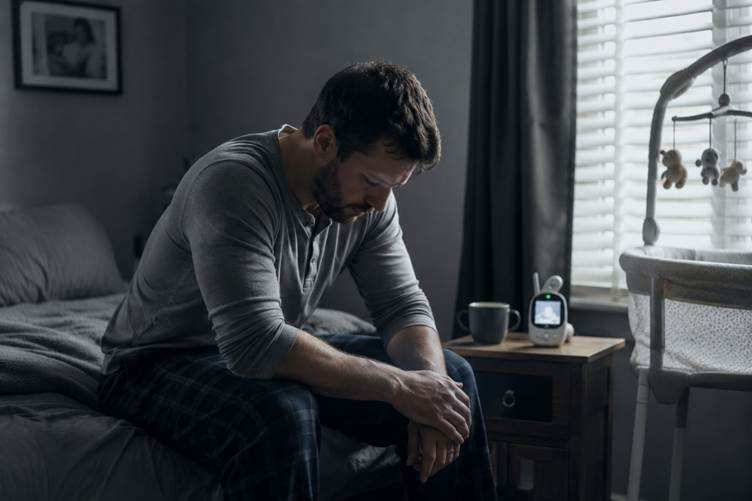
This is the one nobody talks about enough, so let’s be direct about it.
What is paternal postpartum depression? It’s a depressive episode that develops in fathers during pregnancy or within the first year after their child’s birth. It’s driven by a mix of hormonal shifts, sleep deprivation, and the psychological weight of a major life transition — and it’s more common than most people realize, affecting an estimated 1 in 10 new dads [Statistic on paternal postpartum depression prevalence].
The tricky part is that it doesn’t always look like classic depression. In men, it often shows up as:
- Irritability or a short temper — snapping at your partner or older kids over small things.
- Anger or frustration that feels disproportionate to what’s actually happening.
- Withdrawal — working longer hours, spending more time alone, pulling away from your partner.
- Increased risk-taking — drinking more, reckless spending, or other impulsive behavior.
- Physical symptoms like headaches, digestive issues, or unexplained fatigue that doesn’t improve with sleep.
- Loss of interest in things you used to enjoy, including your baby.
If you’ve noticed a couple of these in yourself for more than two weeks, it’s worth taking seriously. This isn’t about being “tough enough” — it’s a medical condition, and it responds well to treatment.
Talk to a doctor if: you’re having thoughts of harming yourself, you feel disconnected from your baby for weeks at a time, or the irritability is affecting your relationship or job. A GP, therapist, or your partner’s OB can point you toward support — some clinics now screen dads at the same visits as moms.
Weight Gain After Having a Baby: Is It Really a Dad Thing?
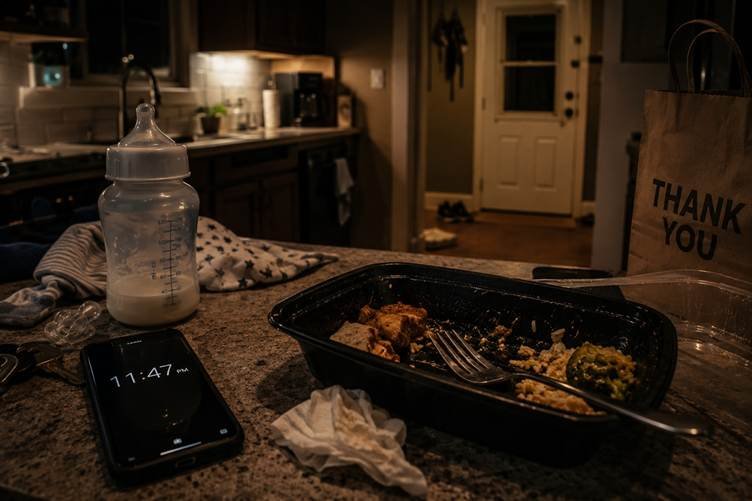
Short answer: yes, and it’s not really about metabolism.
Research has found that new fathers tend to gain weight in the first year after a child is born — often in the range of a few pounds, though it varies a lot by individual [Study on weight gain in new fathers]. It’s not because your body chemistry suddenly betrays you. It’s because your entire routine gets rearranged.
Here’s what’s usually driving it:
- Less time to cook, so more takeout, more convenience food, more late-night eating standing at the counter.
- Less time to exercise — that 6am gym session doesn’t happen when you were up three times overnight.
- More stress eating. Cortisol doesn’t just sit there; it actually increases cravings for high-sugar, high-fat food.
- Less sleep, which messes with hunger hormones. Sleep deprivation lowers leptin (which tells you you’re full) and raises ghrelin (which tells you you’re hungry).
I’ll push back a little on the usual advice here, which is some version of “just prioritize your health.” Cool, thanks. In the first three months, that advice is close to useless. You don’t have the time or energy for a structured diet plan, and honestly, trying to force one might just add another thing to fail at. What actually works better in that window is smaller stuff: keeping easy, decent food in the house, walking with the stroller instead of skipping movement entirely, and giving yourself permission to worry about a proper training plan once things stabilize a bit — usually somewhere around the four to six month mark for most families.
[Calorie deficit and weight loss ]
Sleep Deprivation Tips for New Dads
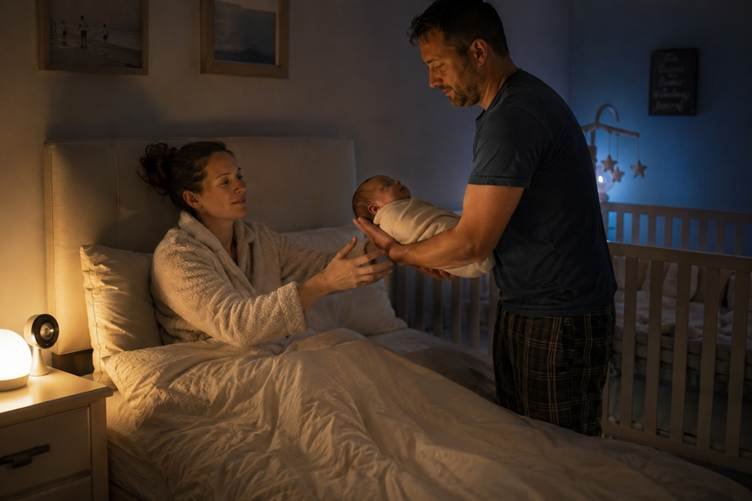
Sleep loss is probably doing more damage to how you feel than anything else on this list. It amplifies the mood stuff, the weight stuff, all of it. You can’t always fix it — babies wake up when they wake up — but you can manage it better.
1. Split the night into shifts, not halves. Instead of both of you being half-awake all night, try one parent handling the first wake-up block (say, 9pm–1am) and the other taking over after. You each get one solid stretch of uninterrupted sleep instead of two broken ones.
2. Nap when you can, even 20 minutes. Short naps don’t fix a sleep deficit, but they take the edge off cortisol and reaction time enough to matter, especially if you’re driving or operating machinery.
3. Protect your sleep window like it’s a meeting. Go to bed the second you get a chance, even if it’s 9pm. Scrolling your phone for “me time” after a rough day feels earned, but it’s cutting into sleep you badly need.
4. Watch the caffeine timing. It’s tempting to caffeine your way through the day, but stacking coffee past early afternoon will wreck the sleep you do get. Front-load it earlier in the day instead.
5. Get outside light in the morning. Even 10 minutes of daylight shortly after waking helps reset your circadian rhythm, which matters more when your sleep schedule is already chaotic.
6. Don’t be a hero. If you have any support — a parent, a friend, a paid sitter for two hours — use it to sleep, not to catch up on chores. The dishes can wait. Your nervous system can’t.
How Long Do These Changes Last?
Most of this isn’t permanent. Testosterone often partially recovers as sleep improves and the newborn phase eases up, though timelines vary a lot by individual and by how many kids you have. Sleep tends to meaningfully improve somewhere between 6 months and a year, depending on the baby. Weight gain, mood, and energy usually follow sleep — as that stabilizes, the rest tends to follow.
That said, “most of this fades” isn’t much comfort at 3am. If you’re six months or more past your baby’s birth and still feel like a shell of yourself, that’s a signal worth paying attention to, not something to just wait out.
When to See a Doctor

Talk to a healthcare provider if you notice:
- Persistent low mood, irritability, or anger lasting more than two weeks
- Thoughts of harming yourself or feeling like your family would be better off without you
- Weight gain that’s rapid or paired with other symptoms (fatigue, low libido, mood changes) — worth checking testosterone and thyroid levels
- Sleep issues that don’t improve even when the baby is sleeping better
- Loss of interest in your baby, your partner, or things you used to enjoy
This is general information, not a diagnosis. If any of this sounds like you, a conversation with your doctor is the right next step — not a Google search at 2am.
FAQ
Does testosterone really drop when you become a dad?
Yes. Research consistently shows testosterone declines in new fathers, often noticeably in the first few months after birth, likely tied to increased caregiving involvement [Study on testosterone decline in new fathers]. For most men, it partially recovers over time.
Can new dads get postpartum depression?
Yes — it’s called paternal postpartum depression, and it affects an estimated 1 in 10 new fathers [Statistic on paternal postpartum depression prevalence]. It often looks like irritability, anger, or withdrawal rather than sadness, which is part of why it’s under-diagnosed.
Is it normal to gain weight after having a baby as a dad?
Yes, modest weight gain in the first year is common and is mostly driven by less time to cook, exercise, and sleep — not a biological shift in your metabolism [Study on weight gain in new fathers].
How much sleep do new dads actually lose?
It varies widely, but broken, fragmented sleep — even if total hours seem okay on paper — is common in the first several months and is a major driver of mood and energy problems in new fathers.
When should a new dad worry about how he’s feeling?
If low mood, anger, or disconnection lasts more than two weeks, or if you’re having any thoughts of self-harm, it’s time to talk to a doctor. Don’t wait for it to pass on its own.