
Deep breathing reduces cortisol by activating your vagus nerve and switching your nervous system from “fight or flight” mode into “rest and digest” mode. Slow, diaphragmatic breaths — especially with longer exhales than inhales — send a direct signal to your brain that the danger has passed, which can lower cortisol output within minutes [Study on slow breathing and vagal tone/parasympathetic activation]. It’s not a cure-all, but for the low-grade, chronic stress most desk workers deal with, it’s one of the few tools that works fast and costs nothing.
If you’re reading this at your desk with your shoulders up around your ears, stick around. We’re going to cover exactly why this works, not just that it works.
Key Takeaways
- Deep breathing (diaphragmatic breathing) activates the vagus nerve, which tells your body to shift out of stress mode.
- Research suggests slow breathing at roughly 5-6 breaths per minute may lower cortisol and reduce perceived stress [Study on breathing rate and cortisol/stress markers].
- Exhaling longer than you inhale (like a 4-7-8 pattern) seems to matter more than just “breathing deeply.”
- A 5-10 minute daily practice tends to work better than one long session when stress is chronic.
- Deep breathing is a support tool, not a replacement for sleep, medical treatment, or addressing the actual source of your stress.
What Is Cortisol, and Why Does It Matter?

Cortisol is a hormone your adrenal glands release when your brain thinks you’re under threat. People call it “the stress hormone,” which is a little unfair — you actually need cortisol. It’s part of what gets you out of bed in the morning and helps you respond to real emergencies.
The problem isn’t cortisol itself. It’s cortisol that never turns off.
Your body was built for stress that comes and goes — a threat shows up, cortisol spikes, you deal with it, levels drop back down. Chronic desk-job stress doesn’t work that way. Deadlines, notifications, a boss who emails at 9pm — none of it is life-threatening, but your nervous system doesn’t always know the difference. So cortisol stays elevated longer than it should, and that’s linked to poor sleep, stubborn belly fat, brain fog, and a weaker immune response.
This is where deep breathing cortisol regulation comes in. It’s one of the only tools you have that can directly interrupt that stress signal in real time, without a pill or a 30-minute meditation retreat.
Does Deep Breathing Actually Lower Cortisol? What the Research Says
Short answer: yes, there’s real evidence behind this — but it’s not magic, and the effect size depends on how you breathe.
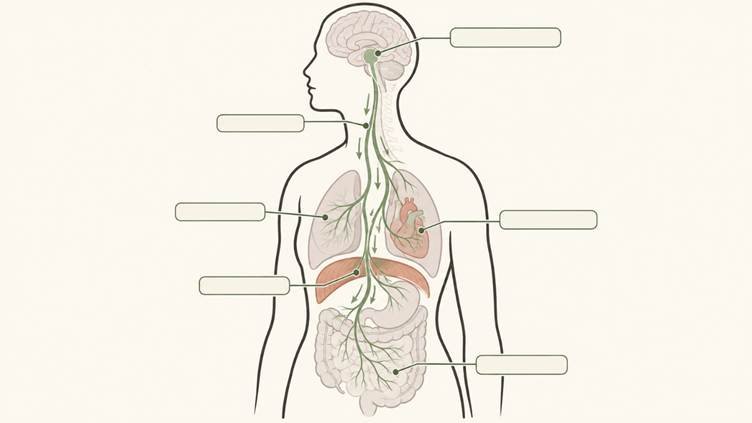
Several studies have looked at slow, controlled breathing and found measurable drops in salivary cortisol after practice sessions, along with reduced self-reported anxiety [Study measuring salivary cortisol before/after slow breathing intervention]. The mechanism comes down to your vagus nerve — a long nerve that runs from your brainstem down through your chest and gut, acting like a communication highway between your body and brain.
When you breathe slowly and deeply, especially with a long exhale, you stimulate the vagus nerve. That stimulation triggers your parasympathetic nervous system (the “rest and digest” branch), which lowers heart rate, drops blood pressure slightly, and turns down cortisol production.
Here’s the part most articles skip: breathing deeply isn’t the same as breathing slowly. You can take a huge, dramatic breath and still keep your nervous system activated if you’re breathing fast or only breathing into your chest. The research points to slow diaphragmatic breathing with extended exhales as the piece that actually moves the needle — not depth alone.
I’ll be honest — I think a lot of wellness content oversells this. Deep breathing won’t fix a genuinely toxic job or chronic insomnia on its own. But as a tool to interrupt a stress spiral in the moment? It’s one of the few things backed by decent evidence that you can do in under five minutes, anywhere.
How to Do Diaphragmatic Breathing for Cortisol (Step-by-Step)
Diaphragmatic breathing — sometimes called “belly breathing” — means breathing by expanding your diaphragm (the muscle beneath your lungs) instead of just lifting your chest and shoulders. Most people breathe shallow, chest-only breaths all day without realizing it, especially when stressed or hunched over a laptop.
Here’s a simple technique to try, based on the 4-7-8 pattern popularized in clinical breathwork:
- Sit or lie down comfortably. Loosen your waistband if it’s tight. Put one hand on your chest, one on your belly.
- Exhale fully through your mouth to start with an empty reset.
- Inhale through your nose for 4 seconds. Your belly hand should rise more than your chest hand.
- Hold the breath for 7 seconds. Don’t strain — if 7 feels like too much at first, do 4 seconds and build up.
- Exhale slowly through your mouth for 8 seconds, like you’re blowing out a candle from a few feet away.
- Repeat for 4-8 cycles. That’s roughly 1-2 minutes.
You’ll probably feel a little lightheaded the first couple of times. That’s normal — your body isn’t used to this much oxygen exchange control. It passes after a few sessions.
If counting stresses you out more than it helps (fair), a simpler version works too: just breathe in for a count of 4 and out for a count of 6, no holding. The extended exhale is the part doing most of the work anyway.
How Often and How Long Should You Practice?

This is where I’ll push back a little on the “just breathe when you’re stressed” advice you see everywhere. Doing it only in the moment of panic is like trying to learn a new language the day of your trip — it helps, but not as much as if you’d practiced ahead of time.
What actually seems to move cortisol levels over time is consistency:
- 5-10 minutes, once or twice a day, tends to show more benefit than one long session per week.
- Morning sessions can help set a calmer baseline before the workday starts.
- A short session before a stressful meeting or right after one can blunt the spike.
- Even 60-90 seconds of slow breathing before bed may help you wind down faster, especially if racing thoughts keep you up.
You don’t need a silent room or a yoga mat. I’ve done this on a crowded train, in a bathroom stall before a presentation, and once in a parking lot before walking into a meeting I was dreading. It works fine in all of those places. The point is doing it, not doing it perfectly.
Other Natural Ways to Reduce Cortisol Without Medication

Deep breathing is one lever, not the only one. If your cortisol is chronically elevated, a few other habits tend to matter just as much, if not more:
- Prioritize sleep consistency. Going to bed and waking at similar times, even on weekends, may help regulate your cortisol rhythm more than sleep duration alone.
- Move your body daily — but don’t overdo intense exercise if you’re already burned out. Long, hard cardio sessions can actually spike cortisol further in an already-stressed system [Research on high-intensity exercise and cortisol response].
- Cut back on caffeine after noon. Caffeine itself triggers a cortisol response, and stacking it on top of an already-stressed system doesn’t help [Study on caffeine intake and cortisol response].
- Get sunlight in the first hour of waking. This helps set your circadian rhythm, which is closely tied to your cortisol curve.
- Limit doomscrolling before bed. [Internally link to: doomscrolling and digital overload article] — the stress response from bad news at 11pm doesn’t turn off just because you close the app.
None of these work as fast as a breathing exercise when you’re mid-panic at your desk. But long-term, they matter more.
When to See a Doctor
If you’re dealing with constant fatigue, unexplained weight changes, persistent anxiety, or sleep that never feels restful even after 8 hours, that’s worth bringing to a doctor. Breathing exercises may help you manage day-to-day stress, but they’re not a substitute for medical evaluation if something deeper is going on with your hormones, thyroid, or mental health. A doctor can also run an actual cortisol test if you suspect a real imbalance rather than guessing from symptoms alone.
FAQ
Does deep breathing lower cortisol immediately?
Some studies show measurable drops in cortisol within a single session of slow breathing, though the effect is usually modest and builds with consistent practice.
How many minutes of deep breathing lowers cortisol?
Most research uses sessions of 5-10 minutes. Shorter bursts of 1-2 minutes can still help in the moment, but daily practice over several weeks appears to have a bigger cumulative effect.
What’s the best breathing technique for cortisol and stress?
Diaphragmatic breathing with an extended exhale — like the 4-7-8 method or box breathing — tends to be the most studied and most effective pattern for triggering the parasympathetic response.
Can breathing exercises replace anxiety medication?
No. Breathing exercises may help manage everyday stress and support treatment, but they shouldn’t replace prescribed medication or therapy without talking to your doctor first.
Is diaphragmatic breathing the same as deep breathing?
Mostly, yes — diaphragmatic breathing is the technical term for what most people mean by “deep breathing.” It specifically involves engaging the diaphragm so your belly expands, rather than shallow breathing that only lifts your chest.