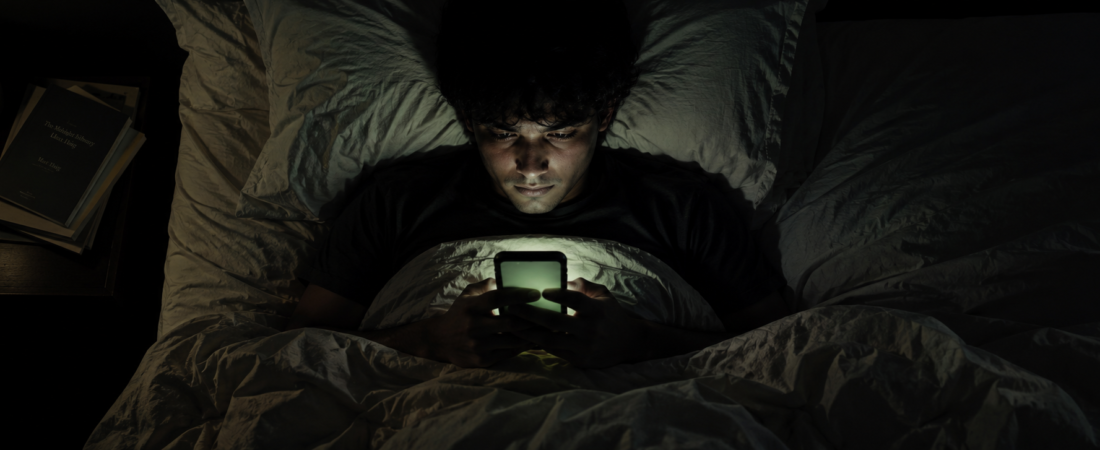
You already know doomscrolling is bad for you. What you probably don’t know is why — and the real answer has less to do with willpower and more to do with brain chemistry. Doomscrolling effects range from disrupted sleep architecture to a genuinely altered stress response, and most of them are happening below the level you’d notice in the moment.
This isn’t another “put your phone away” lecture. You’ve heard that one. This is about the specific mechanisms — the stuff your phone’s screen-time report can’t show you.
Key Takeaways
- Doomscrolling triggers real cortisol spikes, not just “feeling stressed” — your body reacts like it’s facing an actual threat [Study on cortisol response to negative news exposure]
- Blue light isn’t the only sleep problem — the content itself delays your ability to relax, independent of screen brightness
- Late-night scrolling can shorten deep sleep stages, not just total sleep time
- Your brain’s dopamine response to scrolling trains it to crave more scrolling, similar to other compulsive behaviors.
- The anxiety you feel isn’t “in your head” — it’s a measurable nervous system response that can outlast the scrolling session by hours
What Is Doomscrolling, Exactly?
Doomscrolling is the compulsive habit of consuming negative news or content — bad headlines, disaster updates, conflict, outrage — well past the point where it’s informative and into the point where it’s just… consumption. You’re not learning anything new after the tenth similar headline. You’re just feeding a loop.
The term picked up steam around 2020, for obvious reasons, but the behavior itself is older than that. It’s built on the same psychological wiring that makes it hard to look away from a car accident. Our brains are wired to pay extra attention to threats — it kept our ancestors alive. The problem is that a phone can manufacture an endless stream of “threats,” and your nervous system doesn’t know the difference between a real emergency and a headline about one three time zones away.
Does Doomscrolling Cause Anxiety?
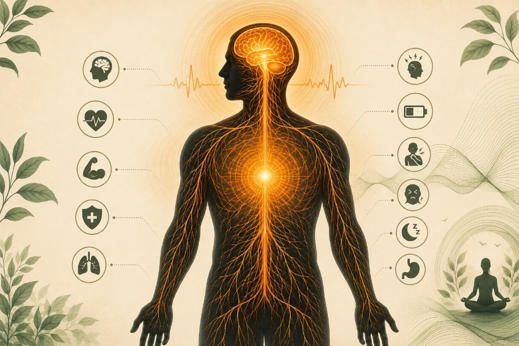
Short answer: yes, for most people, and there’s a real biological reason why. Repeated exposure to distressing content activates your body’s stress response — the same fight-or-flight system that evolved for physical danger, not headlines. Your body releases cortisol, your heart rate can tick up, and your nervous system shifts into a mild but real state of alert [Study linking negative news consumption to elevated cortisol and self-reported anxiety].
Here’s the part people miss: this response doesn’t just happen once and fade. If you’re scrolling for 20, 30, 45 minutes, you’re essentially keeping your stress system “on” for that entire window. Your body doesn’t get a break between headlines the way your brain thinks it does.
And unlike a real threat you can resolve — running from danger, solving a problem — doomscrolling gives your nervous system nowhere to go with that activation. You can’t fix a war zone or a natural disaster by reading about it at 11:47 PM. So the stress just… sits there.
Hidden Dangers of Doomscrolling at Night
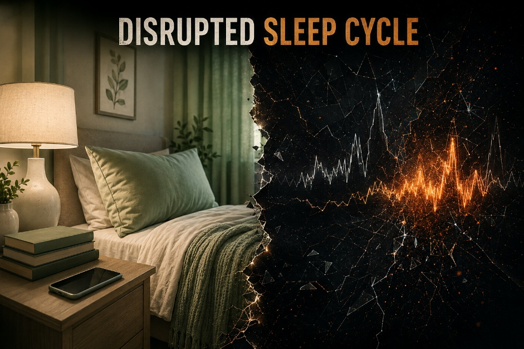
Nighttime doomscrolling deserves its own section because it stacks two problems on top of each other: the content itself, and the timing.
1. It delays sleep onset beyond what blue light alone explains. Most people blame blue light for phone-related sleep issues, and yeah, it plays a role — it can suppress melatonin production [Research on blue light exposure and melatonin suppression]. But here’s the thing: even with night mode on, even with blue-light glasses, doomscrolling at 11 PM still messes with your ability to fall asleep. That’s because an activated, alert nervous system doesn’t want to power down, regardless of screen color temperature.
2. It fragments the wind-down window your brain actually needs. Falling asleep isn’t like flipping a switch — it’s a gradual process your brain needs time to ease into. Scrolling through outrage-bait or crisis headlines right before bed is the opposite of easing into anything.
3. It can reduce deep sleep, not just total sleep time. This is the one that surprises people. You might technically get seven hours of sleep and still wake up wrecked, because the quality of that sleep took a hit. Stress hormones circulating in your system can interfere with the deeper, more restorative stages of sleep [Study on stress hormone levels and slow-wave sleep quality].
4. It trains your brain to associate bed with alertness, not rest. If you consistently scroll in bed, your brain starts linking “bed” with “scanning for threats” instead of “time to sleep.” That’s a rough habit to build, and an even rougher one to unlearn.
5. It steals your REM sleep window indirectly. Delayed sleep onset pushes your entire sleep cycle later, which can eat into REM sleep — the stage tied to emotional processing and memory. Less REM, worse next-day emotional regulation. It’s a nasty little cycle.
How Doomscrolling Affects Your Brain Chemistry
This is where it gets genuinely interesting, and where most articles stop short.
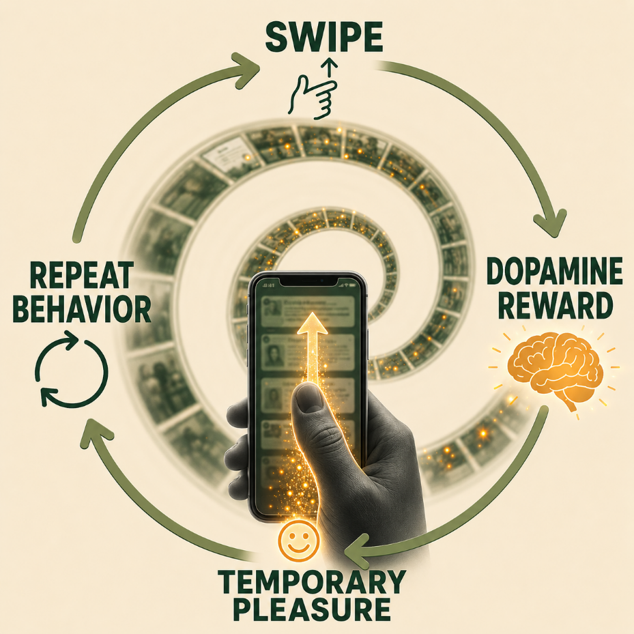
Doomscrolling doesn’t just make you feel bad — it can actually reshape how your brain expects to feel. Every time you get a new piece of information, even bad news, your brain releases a small hit of dopamine. Dopamine isn’t the “pleasure chemical” people think it is; it’s more accurate to call it the “wanting more” chemical. It drives anticipation, not satisfaction [Research on dopamine and reward-seeking behavior in digital media use].
The unpredictability is the hook. You don’t know if the next scroll will bring a mildly annoying headline or something genuinely alarming — and that uncertainty is exactly what keeps your thumb moving. It’s the same variable-reward mechanism that makes slot machines addictive. I’m not being dramatic when I say that; it’s a well-documented behavioral pattern, and social platforms are built with it in mind.
Combine that dopamine-driven “just one more scroll” pull with the cortisol from the content itself, and you get a genuinely confusing internal state: wired, anxious, and weirdly unable to stop. That’s not a character flaw. That’s your brain chemistry doing exactly what it’s designed to do in response to this specific kind of stimulus.
I’ll push back a little on the popular advice here, though — a lot of wellness content tells you to just “delete the app” and call it solved. For some people that works. For a lot of people, it just relocates the habit to a browser tab. The apps aren’t the root cause; the underlying craving for stimulation and threat-monitoring is. Deleting Instagram doesn’t fix that if you’re still refreshing a news site every ten minutes.
Long-Term Effects of Doomscrolling on Mental Health
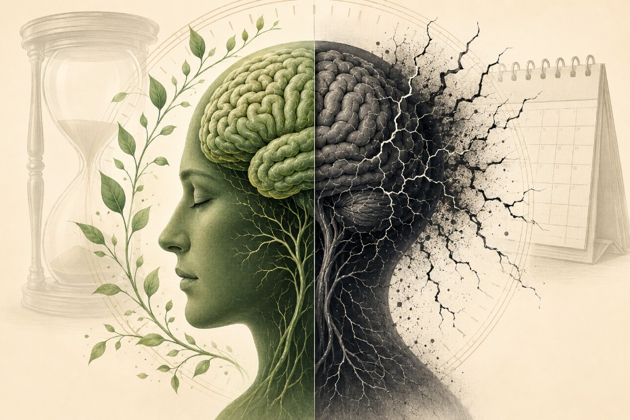
The short-term stuff — bad sleep, a wired feeling, low-grade anxiety — is annoying but recoverable. The concern is what happens when this becomes a nightly pattern instead of an occasional one.
Chronic activation of your stress response has been associated with a handful of downstream issues over time, including a harder time regulating mood, increased baseline anxiety, and a shortened attention span. Your brain is adaptable — that’s usually a good thing — but it adapts to whatever you consistently expose it to. If you consistently expose it to threat-scanning and outrage, it can get better at threat-scanning and outrage, and worse at calm, focused states.
There’s also a subtler cost: emotional numbing. Some people who doomscroll heavily report feeling less able to react to genuinely important news, because their nervous system has been running at “concerned” for so long that it doesn’t have another gear left. That’s worth sitting with for a second, because it’s the opposite of what most people assume — that staying constantly informed makes you more engaged, not less.
If you notice persistent anxiety, low mood, or sleep problems that aren’t improving, it’s worth talking to a doctor or mental health professional rather than trying to white-knuckle it through screen-time limits alone.
A Few Things That Actually Help
Not a magic fix, but small, specific changes that tend to make a real difference:
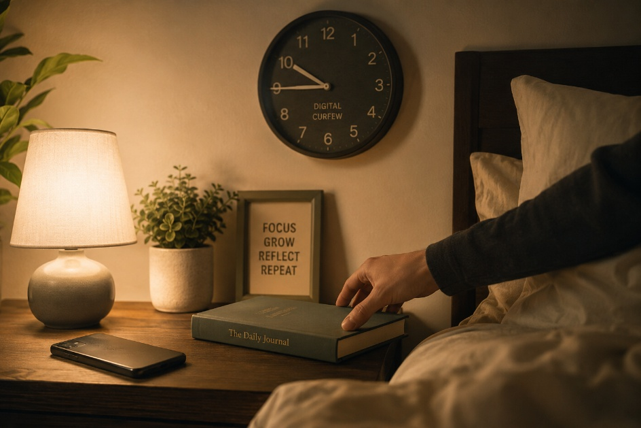
- Set a hard cutoff time, ideally 45-60 minutes before bed, and keep the phone physically outside arm’s reach after that
- Batch your news check into one or two set windows a day instead of grazing all day long
- Notice the physical signs — jaw tension, shallow breathing, restless legs — those are your cortisol response showing up in real time
- Replace, don’t just remove — swap the pre-bed scroll for something else with your hands (a book, a puzzle, literally anything), because an empty habit slot tends to get refilled with the same habit
FAQ
Does doomscrolling actually cause anxiety, or does anxiety cause doomscrolling?
Honestly, it can run both directions. Existing anxiety can make you more likely to seek out threat-related information, and doomscrolling itself can raise anxiety through repeated stress-response activation. It’s more of a feedback loop than a one-way street.
How long does it take for doomscrolling to affect sleep?
Even a single late-night session can delay sleep onset that same night. The deeper effects — reduced sleep quality, fragmented deep sleep — tend to show up with repeated, near-nightly patterns rather than a one-off.
Is doomscrolling a real addiction?
It shares mechanisms with compulsive behaviors, especially around dopamine and variable reward, but it’s not officially classified as a clinical addiction the way substance use disorders are. That said, “not clinical” doesn’t mean “not real” — the compulsive pull is well documented.
Can doomscrolling cause physical symptoms?
Yes, for a lot of people. Tension headaches, jaw clenching, a racing heart, stomach unease — these are stress-response symptoms, not separate issues. Your body doesn’t fully separate “reading about danger” from “experiencing danger.”
What’s the fastest way to stop doomscrolling at night?
Removing the phone from the bedroom entirely tends to work better than willpower-based limits, because it removes the decision point altogether. Pair that with a replacement activity, since an empty habit slot usually just gets refilled.