
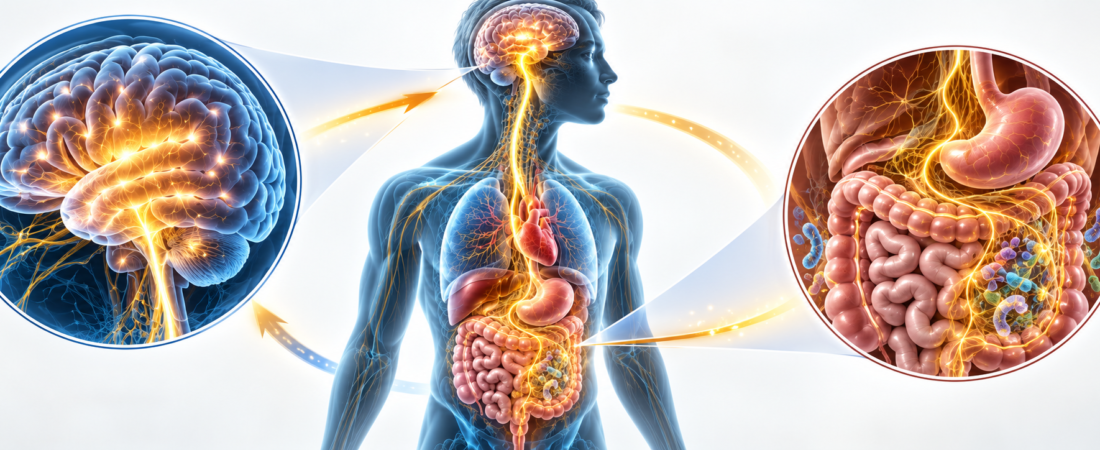
If you’ve ever had a big presentation and felt your stomach twist into knots, or dealt with weeks of bloating during a rough patch at work, you already know the answer to how does stress affect your gut health — it’s real, it’s measurable, and it’s not “all in your head.” Stress triggers your brain to send signals through the vagus nerve and bloodstream that slow digestion, alter gut bacteria, and increase intestinal permeability. This happens through a well-documented pathway called the gut-brain axis, and chronic stress can leave lasting changes in how your digestive system functions.
This isn’t a fringe theory. It’s one of the more active areas in digestive health research right now, and if you’ve been told your bloating or irregular bathroom habits are “just anxiety” — with no explanation of what that actually means physically — you deserve better than that. Let’s get into what’s actually happening.
Key Takeaways
- The gut-brain axis is a two-way communication highway between your brain and digestive system, running mainly through the vagus nerve.
- Cortisol, your main stress hormone, can slow digestion, increase gut permeability, and shift the balance of bacteria in your microbiome.
- Common signs stress is hitting your gut include bloating, urgency, constipation-diarrhea cycles, and a “nervous stomach” before stressful events.
- Healing after chronic stress usually takes weeks to months, not days, and involves nervous system regulation as much as diet changes.
- If symptoms are severe, sudden, or include blood, weight loss, or fever, that’s a sign to see a doctor — not just manage stress harder.
What Is the Gut-Brain Axis?
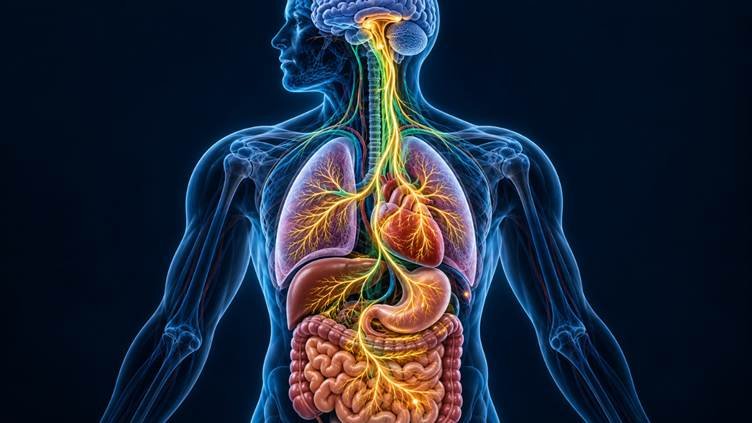
The gut-brain axis is the direct communication network between your central nervous system and your gastrointestinal tract. It’s not a metaphor — it’s a physical, biological connection made up of nerves, hormones, and immune signaling molecules that carry messages in both directions.
The biggest player here is the vagus nerve, a long nerve that runs from your brainstem down through your neck and chest into your abdomen, touching nearly every major organ along the way, including your gut. Roughly 80-90% of the fibers in the vagus nerve carry information from the gut to the brain, not the other way around [Peer-reviewed source on vagus nerve afferent fiber percentage]. That’s worth sitting with for a second — your gut is talking to your brain more than your brain is talking to it.
This is also why your gut has been nicknamed the “second brain.” It contains its own nervous system, called the enteric nervous system, with hundreds of millions of neurons that can operate somewhat independently of your brain [Source on enteric nervous system neuron count]. Your gut doesn’t just receive orders. It has opinions.
So when people say stress “affects the gut,” they mean this specific wiring is getting flooded with stress signals, and your digestive system is reacting to them in real time.
How Does Stress Affect Your Gut Health, Exactly?

Here’s where it gets concrete. When your brain perceives a threat — a deadline, a fight with your partner, doom-scrolling the news at midnight — it activates something called the HPA axis (hypothalamic-pituitary-adrenal axis). This is your body’s central stress-response system, and it ends with your adrenal glands releasing cortisol into your bloodstream.
Cortisol is useful in short bursts. It’s the reason you can react fast in an emergency. The problem is that most modern stress isn’t a single emergency — it’s low-grade and constant, and your body doesn’t fully distinguish between “there’s a tiger” and “I have 40 unread emails and a mortgage payment due Friday.” Chronically elevated cortisol changes how your gut functions in several specific ways:
- Slows or speeds up motility. Stress can either slow down digestion (leading to constipation) or speed it up (leading to diarrhea), depending on the person and the type of stress involved [Research on stress and GI motility changes].
- Increases intestinal permeability. Chronic stress may weaken the tight junctions between cells lining your gut wall — sometimes referred to informally as “leaky gut” — allowing substances to pass through that normally wouldn’t [Study on cortisol and intestinal permeability].
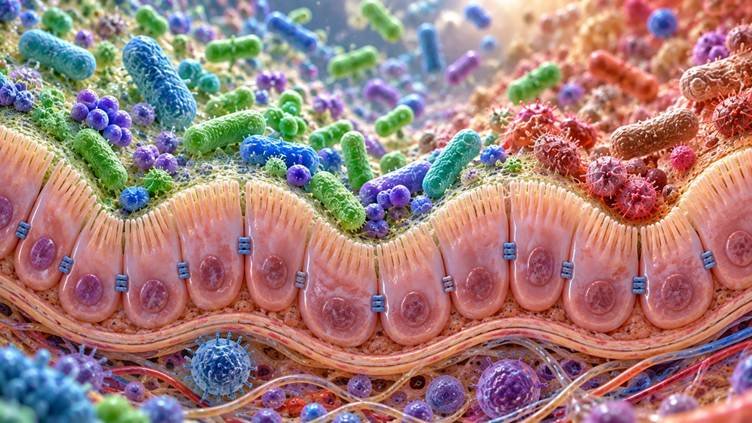
- Alters your gut microbiome. Stress hormones can shift the balance of bacteria in your gut, reducing beneficial strains and allowing less favorable ones to increase [Research on stress-induced microbiome changes].
- Reduces blood flow to the digestive tract. Under stress, your body redirects blood toward muscles and away from digestion, which is part of why eating during high stress often feels uncomfortable.
- Increases gut sensitivity. Chronic stress can lower your pain threshold in the gut, meaning normal digestive sensations start to feel more intense or uncomfortable.
None of this means stress is “causing” a disease on its own. But it does mean stress is a legitimate, physiological contributor to digestive symptoms — not a cop-out explanation doctors give when they can’t find anything else wrong.
[Internally link to: article on chronic stress and cortisol management]
What Are the Signs Stress Is Affecting Your Gut?
Not everyone experiences stress-related gut issues the same way, but there are patterns worth recognizing. If you’ve noticed several of these, especially clustering around high-stress periods, that’s a strong signal.
- Bloating that worsens during stressful weeks but improves on vacation or slower days
- A “nervous stomach” — nausea, cramping, or urgency before stressful events like interviews or public speaking
- Alternating constipation and diarrhea, sometimes both in the same week
- Appetite changes — either stress-eating or losing your appetite entirely under pressure
- Feeling full quickly or getting uncomfortable after eating even small meals
- Gut symptoms that flare alongside anxiety or low mood, not just around food triggers
I’ll add a personal observation here, because I think it gets missed a lot: most people try to fix this purely through diet — cutting gluten, dairy, cutting this or that — before ever addressing the stress piece. Diet matters, sure. But if you’re eliminating foods and still stressed out of your mind at 11pm scrolling your phone, you’re treating half the problem at best. I’ve seen people spend months on elimination diets that barely moved the needle, because the actual driver was a nervous system stuck in overdrive.
How to Heal Your Gut After Chronic Stress

Healing isn’t instant, and honestly, anyone promising a “7-day gut reset” after months or years of chronic stress is oversimplifying things. Your gut lining does regenerate — some cells turn over within days — but the systemic changes, like microbiome shifts and nervous system patterns, take longer to settle, often several weeks to a few months of consistent effort [Source on intestinal epithelial turnover timeline].
Here’s a realistic starting approach:
1. Regulate Your Nervous System First
This sounds vague, so let’s make it specific. Practices that stimulate the vagus nerve — slow diaphragmatic breathing, humming, cold water on your face, or even gargling — may help shift your body out of “fight or flight” and into “rest and digest” mode [Research on vagal tone and breathing exercises]. Even five minutes before meals can make a measurable difference in how comfortably you digest.
2. Eat in a Calmer State

Eating while stressed, distracted, or rushing genuinely changes digestion. Your body diverts resources away from your gut when it thinks it’s under threat. Try sitting down, slowing your first few bites, and skipping the “eat lunch at your desk while doomscrolling” combo — I know it’s tempting, but it works against you here.
3. Support Your Microbiome Gradually
Fiber from a variety of plant sources feeds beneficial bacteria. Fermented foods like yogurt, kefir, and sauerkraut may also support microbial diversity, though research on probiotic supplements for stress-related gut symptoms is still developing and results vary by strain [Research on probiotics and stress-related GI symptoms]. Don’t expect a single supplement to undo months of chronic stress — it won’t.
4. Prioritize Sleep
Poor sleep and gut health feed into each other in both directions. Chronic short sleep raises cortisol, and elevated cortisol makes quality sleep harder to get. Fixing one often helps the other.
5. Address the Root Stressor, Not Just the Symptoms
This is the step people skip. If work, a relationship, or a specific life situation is the real driver, digestive fixes will only go so far. Therapy, structural life changes, or simply setting firmer boundaries can matter more for your gut than any supplement.
[Internally link to: article on evidence-based stress management techniques]
If your symptoms are severe, sudden, involve blood in your stool, unexplained weight loss, fever, or persistent pain, these are not stress-only symptoms — please see a doctor to rule out other causes before assuming stress is the sole explanation.
Frequently Asked Questions
Can stress alone cause IBS-like symptoms?
Stress can trigger or worsen IBS-like symptoms in people who already have a sensitive gut, and it’s considered one of the most common triggers for symptom flares. It’s not usually the sole cause, but it’s rarely unrelated either.
How long does it take for gut health to recover after chronic stress?
Recovery timelines vary, but many people notice initial improvement within 2-4 weeks of consistent stress management and dietary support, with fuller changes to the microbiome taking a few months.
Is bloating from stress different from bloating from food intolerance?
Often, yes. Stress-related bloating tends to fluctuate with your emotional state and stress load, while food-related bloating is more consistently tied to specific meals. That said, the two frequently overlap, since stress can also make you more reactive to certain foods.
Can probiotics fix stress-related gut issues?
Probiotics may help support your microbiome, but they’re not a stand-alone fix for stress-driven gut problems. Research suggests certain strains may modestly help with stress-related symptoms, though results are strain-specific and still being studied.
Should I see a doctor for stress-related digestive symptoms?
If symptoms are mild and match a clear stress pattern, self-management is a reasonable starting point. But talk to a doctor if symptoms are severe, persistent, or include red-flag signs like blood in stool, unintended weight loss, or fever, to rule out other conditions first.