
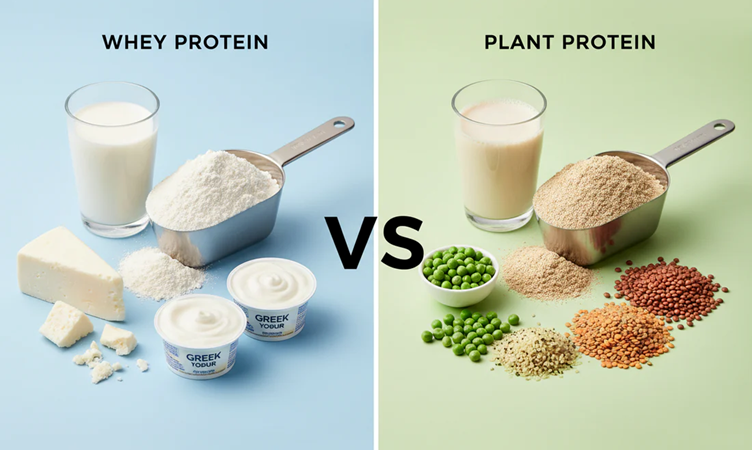
If you’ve spent any time in a gym Facebook group or a Reddit thread, you’ve seen this argument turn ugly fast. People treat whey vs plant protein like a religious debate. It isn’t. For muscle growth, whey protein and plant protein produce similar results when total protein and leucine intake are matched — whey just gets you there with less effort because of its amino acid density. Plant protein can close that gap almost completely if you choose a blended source and eat a bit more of it.
Key Takeaways
- Whey protein has a slight edge for muscle growth because of its complete amino acid profile and higher leucine content, the amino acid that kicks off muscle protein synthesis.
- Plant protein can match whey’s results almost exactly — but only if you eat enough of it and blend sources (like pea + rice) to cover the amino acids any single plant protein lacks.
- The real difference between whey vs plant protein for muscle gain comes down to total daily protein and leucine intake, not the source itself.
- If you have dairy sensitivity, IBS, or ethical/environmental reasons to skip whey, a well-formulated plant blend will get you nearly identical results.
- Neither one is “better” in a vacuum — better for your gut, budget, and goals is the only question that matters.
That’s the whole answer. Everything below is the “why” and the “how do I actually do this.”
What Is Whey Protein, Exactly?
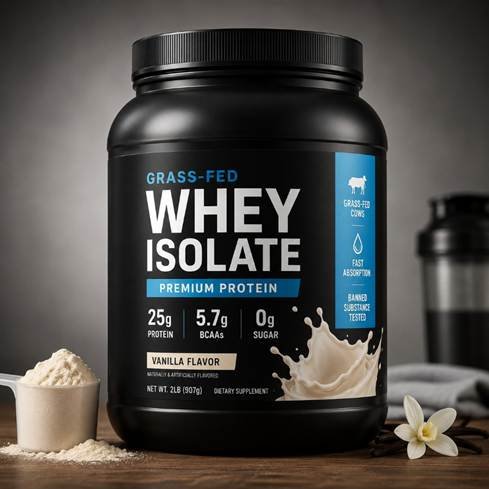
Whey is the liquid part of milk that separates out during cheese-making. It used to be a byproduct dairy farmers threw away — now it’s a multi-billion dollar industry, which tells you something about how effective it turned out to be.
There are three main forms you’ll see on labels:
- Whey concentrate — around 70-80% protein, still has some lactose and fat, usually the cheapest option
- Whey isolate — 90%+ protein, most of the lactose filtered out, better if you’re lactose-sensitive
- Whey hydrolysate — pre-broken-down for faster digestion, pricier, honestly overkill for most people
Whey is a complete protein, meaning it has all nine essential amino acids your body can’t make on its own. It’s also unusually high in leucine — roughly 10-11% of its amino acid content [CITE: peer-reviewed source on whey protein leucine content percentage] — which matters a lot, and I’ll explain why in a second.
What Is Plant Protein, and Why Isn’t It “Complete”?
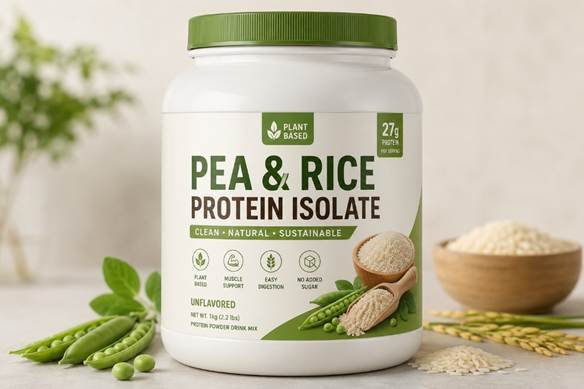
Plant protein powders are made from things like peas, brown rice, hemp, or soy, ground down and processed into isolate or concentrate form, same as whey.
The catch: most single-source plant proteins are missing or low in at least one essential amino acid. Rice protein is short on lysine. Pea protein is a little low on methionine. This is why old-school nutrition advice said plants were “incomplete” — technically true for any one source, but that’s not the whole story.
Soy and quinoa are actually exceptions — both are complete proteins on their own, which surprises people who assume all plant protein needs to be combined.
Whey Protein vs Plant Protein Amino Acid Profile: The Real Comparison
This is where the debate actually lives, so let’s get specific instead of hand-wavy.
Muscle protein synthesis — the process where your body repairs and builds muscle fibers after training — is triggered largely by hitting a leucine threshold, thought to be around 2-3 grams per meal for most adults [CITE: study on leucine threshold and muscle protein synthesis in resistant-trained adults]. Whey hits that threshold easily with a standard 25-30g scoop. Most single-source plant proteins need a bigger serving — sometimes 35-40g — to deliver the same leucine punch.
Here’s a rough side-by-side:
| Whey (per 25g serving) | Pea Protein (per 25g serving) | |
| Leucine | ~2.5-2.7g | ~1.9-2.1g |
| Complete profile | Yes | Mostly, low in methionine |
| Digestion speed | Fast | Moderate |
| Common allergens | Dairy, lactose | Generally low-allergen |
[CITE: comparative amino acid data table for whey vs pea protein isolate]
So does this mean plant protein “loses”? Not really — it just means you need a slightly bigger serving, or a blend, to match it. Pea protein blended with rice protein covers both of their weak spots and produces an amino acid profile that’s close enough to whey that most research finds no meaningful difference in strength or lean mass outcomes over 8-12 weeks as long as total daily protein was equal between groups.
That “as long as” is doing a lot of work in that sentence, and honestly, it’s the part most blog posts skip.
Is Plant Protein as Effective as Whey for Building Muscle?

Short answer: yes, when you account for the amino acid gap by eating more of it or choosing a blend.
Here’s the thing nobody tells you upfront — most people who “switch to plant protein and don’t grow” aren’t failing because plants are inferior. They’re failing because they swapped a 30g whey scoop for a 30g plant scoop and called it even, when the plant scoop delivers noticeably less usable leucine.
If you’re making the switch, here’s what actually needs to change:
- Bump your serving size by about 15-20% if going single-source (like straight pea protein)
- Choose a blend — pea + rice, or pea + hemp — instead of a single plant source
- Watch your total daily protein, not just your shake — most research supports somewhere around 1.6-2.2g per kg of bodyweight for people actively building muscle [CITE: research on optimal daily protein intake range for resistance-trained adults]
- Don’t obsess over timing — the “anabolic window” panic around drinking your shake within 30 minutes post-workout has been mostly walked back by more recent research; total daily intake matters far more than the exact hour you drink it [CITE: research on protein timing vs total daily intake for muscle protein synthesis]
- Give it 8-12 weeks before judging results — muscle growth is slow, and switching protein sources isn’t going to speed that up or slow it down dramatically either way
Follow that list and the “whey advantage” mostly disappears in practice, even if it exists on paper.
Best Plant Protein Powder for Lean Muscle: What to Look For
I’ll be honest — I’m not going to name specific brands here because formulations change and what’s good today gets reformulated next year. But here’s what actually matters when you’re standing in the supplement aisle or scrolling a product page:
- Blended sources (pea + rice, or a 3-4 source blend) beat single-source almost every time for amino acid completeness
- Protein per scoop that’s actually 20g+ — some plant powders pad servings with fillers and you’re getting less protein than the front label implies
- Third-party testing (look for NSF Certified for Sport or Informed Sport logos) — this matters more for plant proteins since some have had heavy metal contamination concerns in past testing [CITE: report on heavy metal testing in plant-based protein powders]
- Minimal added sugar — a lot of plant proteins compensate for chalky texture with sugar; check the label
- Digestive tolerance — some people bloat on pea protein specifically; if that’s you, try a rice-hemp blend instead
I’ll add a mild opinion here: I think the “clean label” marketing on a lot of plant proteins is more about price point than purity. A well-made whey isolate is just as “clean” as most plant blends — don’t let marketing language do your thinking for you.
Digestion, Allergies, and Why People Actually Switch
Most people don’t start Googling “whey vs plant protein” because of amino acid science. They start Googling it because whey is giving them gas, bloating, or worse.
That’s usually a lactose intolerance issue, not a protein issue. If that’s you, whey isolate (which has most lactose removed) might solve it without switching categories entirely. But if you’ve got a dairy allergy, IBS that dairy aggravates, or you’re vegan, plant protein is the obvious answer — and the “is it as good” question becomes less about optimization and more about “what can I actually tolerate and stick with consistently.”
And consistency, not the label on the tub, is what actually builds muscle over a year.
[Internally link to: high-protein meal prep for muscle gain on a budget]
For general dietary protein guidelines, the Dietary Guidelines for Americans (USDA/HHS) is a solid, non-hype reference point. For amino acid and muscle protein synthesis research, PubMed’s collection on protein timing and resistance training is worth a browse if you like reading primary sources instead of takes on takes.
So Which One Should You Actually Buy?
If you’re not dealing with any digestive or dietary restrictions, whey is the slightly more efficient, more forgiving option — you can be a little lazier about serving size and still hit your leucine targets.
If you’re vegan, lactose intolerant, or just prefer to eat lower on the food chain for environmental reasons, a well-blended plant protein will get you there. You’ll just need to be a bit more deliberate about serving size and total daily protein.
Neither one is going to build muscle by itself anyway. The protein powder is maybe 5% of the equation. The other 95% is progressive resistance training, sleep, and eating enough calories overall [CITE: general resistance training and muscle hypertrophy overview]. If you’re skipping leg day and hoping the right protein powder saves you, that’s not a supplements problem.
If you have kidney issues, are pregnant, or have any condition affecting protein metabolism, talk to your doctor before making significant changes to your protein intake.
FAQ
Is whey protein better than plant protein for building muscle?
Whey has a slight edge due to higher leucine content and a complete amino acid profile in smaller servings. But when plant protein intake and blend quality are matched, research shows similar muscle and strength outcomes [CITE: meta-analysis comparing plant vs animal protein supplementation on muscle outcomes].
Can you build the same muscle mass on plant protein as whey?
Yes, as long as you eat enough total protein daily and choose a blended plant source (like pea + rice) rather than a single incomplete source.
How much plant protein do I need compared to whey?
Roughly 15-20% more per serving if you’re using a single-source plant protein, to make up for the lower leucine density. Blended sources close most of that gap.
Does mixing whey and plant protein work?
Yes — many people use both, taking whey post-workout for faster digestion and a plant blend at other times of day. There’s no research suggesting this is worse than sticking to one type.
Is plant protein harder to digest than whey?
It depends on the person and the source. Some people find pea protein bloating; rice and hemp tend to be gentler. Whey can cause issues specifically for those with lactose intolerance.