
If you’ve been dragging yourself through the day on caffeine and willpower, wondering why your hair’s coming out in the shower drain and your brain feels like it’s wading through fog — iron deficiency might be worth a look. Women are more prone to iron deficiency mainly because of monthly blood loss through menstruation, higher iron needs during pregnancy, and diets that often don’t replace what’s lost. Roughly 1 in 3 premenopausal women is affected by low iron at some point, and most don’t find out until symptoms have been building for months [Prevalence statistic on iron deficiency in premenopausal women].
This isn’t a “you’re just tired” problem. It’s a biology problem — and once you understand the mechanics, the fatigue starts making a lot more sense.
Key Takeaways
- Menstruation is the single biggest reason women lose more iron than men, month after month.
- Women need roughly 18 mg of iron per day during their reproductive years — more than double what men need.
- Common signs include fatigue, hair shedding, brain fog, cold hands, and unusual cravings for ice or starchy foods.
- Iron deficiency and anemia aren’t the same thing — you can have low iron stores for years before your hemoglobin drops enough to be called anemic.
- A simple blood panel (ferritin, hemoglobin, CBC) can confirm it — guessing from symptoms alone isn’t reliable.
- Always talk to a doctor before starting iron supplements; too much iron causes its own problems.
Why Are Women More Prone to Iron Deficiency?
Here’s the short version: women lose iron faster than they can replace it, and most diets aren’t built to keep up.
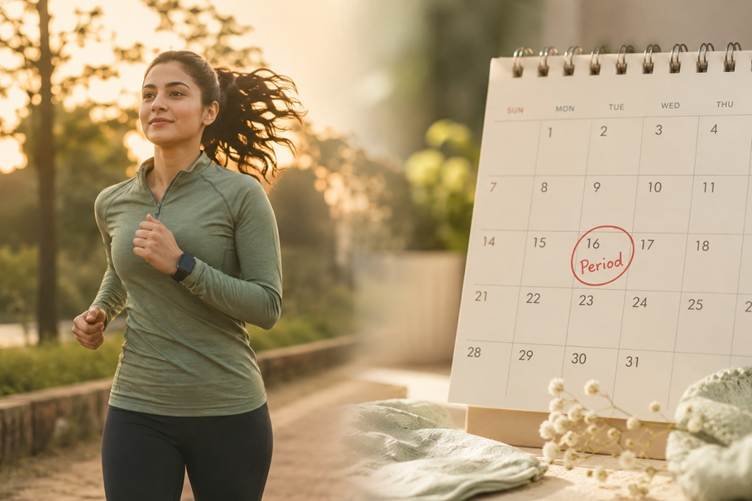
Every month, menstruation removes a measurable amount of iron along with blood. For most women that’s manageable. But for the estimated 1 in 5 who deal with heavy periods, the losses can outpace what a normal diet puts back [Data on heavy menstrual bleeding prevalence and associated iron loss]. Add pregnancy, breastfeeding, endurance exercise, or a mostly plant-based diet into the mix, and the math tips further out of balance.
Men, by comparison, mostly just need to replace what’s lost through normal cell turnover — a much smaller, steadier drain. That’s the whole reason the recommended daily iron intake for women (18 mg) is more than double the amount recommended for men (8 mg) [NIH or equivalent daily iron intake recommendations by sex]. It’s not that women’s bodies are somehow worse at handling iron. They just need more of it, more consistently, and modern diets don’t always deliver.
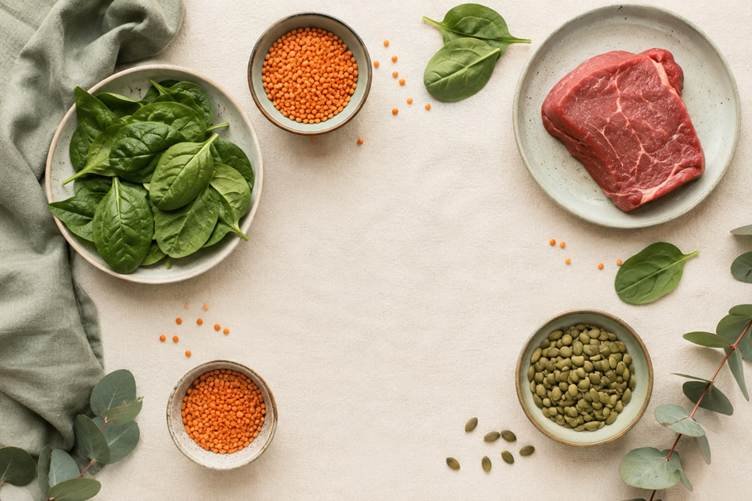
I’ll be honest — I think a lot of “eat more spinach” advice oversimplifies this. Spinach has iron, sure, but it’s the non-heme kind, which your body absorbs far less efficiently than the iron in red meat or organ meats. If you’re vegetarian and relying on leafy greens alone to fix a deficiency, you’re probably not moving the needle as fast as you think.
What Causes Iron Deficiency in Women?
There’s rarely just one cause. It’s usually a stack of smaller factors that add up.
- Menstrual blood loss. This is the biggest driver for most premenopausal women, especially those with heavy or prolonged periods.
- Pregnancy and postpartum recovery. Blood volume increases dramatically during pregnancy, and the body needs extra iron to support the placenta and growing baby — needs jump to around 27 mg per day [Recommended daily iron intake during pregnancy].
- Low dietary intake. Diets low in heme iron (found in meat, poultry, and fish) make it harder to keep up, especially for vegetarians and vegans who rely on less-absorbable plant sources.
- Frequent blood donation. Giving blood regularly without adequate recovery time between donations can slowly deplete stores.
- Gut issues that block absorption. Conditions like celiac disease, IBS, or long-term use of antacids can interfere with how much iron your gut actually absorbs, regardless of how much you eat.
- Endurance training. Runners and other endurance athletes lose small amounts of iron through sweat and a phenomenon called “foot-strike hemolysis,” where red blood cells break down from repeated impact.
Notice that diet is just one item on that list. That’s why “just eat more red meat” doesn’t fix everyone — if the issue is absorption or blood loss, food alone won’t close the gap.
There’s also a less-talked-about factor: hormonal birth control. Women on hormonal IUDs or the pill often have lighter periods, which can actually protect against iron loss. Meanwhile, women who use copper IUDs sometimes notice heavier periods, which can work against them [Research comparing menstrual blood loss across contraceptive types]. If you switched birth control methods around the same time your fatigue started, that’s worth mentioning to your doctor — it’s an easy thread to overlook.
How Is Iron Deficiency Diagnosed?
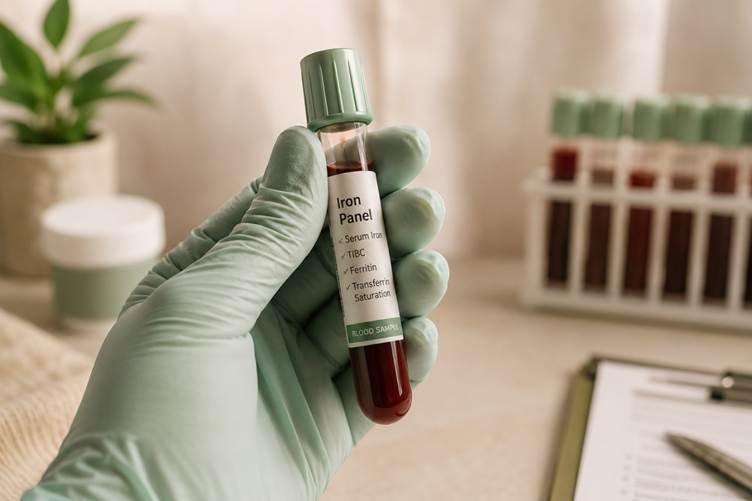
You can’t diagnose iron deficiency by symptoms alone, and I’d push back on anyone who tells you otherwise. Too many conditions overlap. The only way to actually know is a blood draw, and there are a few numbers worth understanding before you go in:
- Ferritin — this reflects your stored iron. It’s usually the first thing to drop, often years before you feel obviously unwell. A “normal” ferritin on a standard lab range might still be low enough to cause symptoms; some functional medicine practitioners aim for a higher optimal range than the bare minimum labs flag as abnormal [Discussion of optimal vs. standard reference range for ferritin in symptomatic women].
- Hemoglobin — this measures the oxygen-carrying protein in your red blood cells. It only drops once deficiency has progressed further, which is why it’s a later-stage marker, not an early one.
- CBC (complete blood count) — this gives your doctor a fuller picture, including red blood cell size (MCV), which tends to shrink in iron-deficiency anemia.
- Transferrin saturation — this shows how much of your iron-transport protein is actually carrying iron. It’s a useful secondary check when ferritin results are ambiguous.
If your doctor only runs a basic CBC and skips ferritin, it’s fair to ask for it specifically. A lot of women get told their bloodwork is “normal” when what actually happened is nobody checked the one number that would have caught the problem early.
Iron Deficiency Symptoms in Women
Symptoms tend to creep in slowly, which is exactly why so many women write them off as stress or “just being busy.”
- Constant fatigue that doesn’t improve with sleep
- Hair thinning or shedding more than usual
- Pale skin, especially noticeable inside the lower eyelid
- Shortness of breath during activities that used to feel easy
- Brain fog or trouble concentrating
- Cold hands and feet, even in a warm room
- Restless legs, particularly at night
- Unusual cravings for ice, dirt, or starch — a condition called pica
- Brittle nails that chip or spoon-shape easily
If you’ve ever caught yourself chewing on ice cubes and couldn’t explain why, that’s actually a documented sign — not just a weird habit. It’s one of the stranger symptoms, but also one of the more specific ones.
Here’s the thing worth repeating: none of these symptoms are exclusive to iron deficiency. Thyroid issues, vitamin B12 deficiency, and plain old chronic stress can look almost identical. That overlap is exactly why guessing isn’t a great strategy — a blood test settles it in a way that symptom-checking never fully can.
Signs of Iron Deficiency in Women Over 30

Something shifts for a lot of women in their 30s. Periods that used to be predictable get heavier. Life gets busier, meals get skipped more often, and pregnancy or postpartum recovery may have already drawn down iron stores that never fully rebuilt.
Women over 30 with iron deficiency often report symptoms that are more pronounced than what they remember in their 20s — more persistent exhaustion, more noticeable hair loss, and a kind of mental sluggishness that feels different from ordinary tiredness. Some also notice heart palpitations or a racing pulse with minor exertion, which happens because the heart works harder to move oxygen around when red blood cells aren’t carrying enough of it [Clinical explanation of cardiovascular symptoms in iron-deficiency anemia].
If any of this sounds familiar and you’re past 30, it’s worth asking your doctor for a ferritin test specifically — not just a standard CBC. Ferritin measures your stored iron, and it’s often the first marker to drop, sometimes years before hemoglobin (the marker that shows up on a basic CBC) falls low enough to be flagged as anemia.
How Much Iron Do Women Need Daily?
This depends heavily on your life stage:
| Life Stage | Recommended Daily Iron |
| Women 19–50 | ~18 mg |
| Pregnant women | ~27 mg |
| Breastfeeding women | ~9–10 mg |
| Women over 50 (post-menopause) | ~8 mg |
[NIH Office of Dietary Supplements daily iron intake recommendations by age and life stage]
Once menstruation stops, iron needs actually drop closer to what men require — one of the few silver linings of menopause, honestly. That’s also why iron deficiency in postmenopausal women is less common and, when it does show up, usually points to something else going on (like a GI issue) that deserves a doctor’s attention rather than just a supplement.
Good dietary sources of iron include:
- Heme iron (better absorbed): red meat, poultry, liver, oysters, sardines
- Non-heme iron (less absorbed, but still useful): lentils, tofu, spinach, fortified cereals, pumpkin seeds
Pairing non-heme sources with vitamin C — think lentils with bell peppers, or spinach with a squeeze of lemon — can meaningfully boost absorption [Study on vitamin C enhancing non-heme iron absorption]. On the flip side, coffee and tea taken right alongside an iron-rich meal can blunt absorption, so if you’re working on your levels, it’s worth leaving an hour or so of buffer.
Should You Take an Iron Supplement?
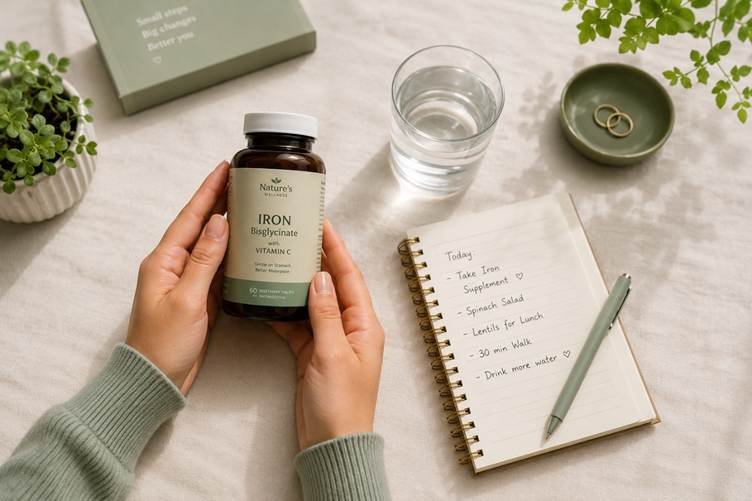
Maybe — but not without knowing your numbers first.
Iron supplements can help correct a confirmed deficiency, and for many women they’re genuinely effective. But taking iron you don’t need isn’t harmless. Excess iron builds up in the body and, over time, may stress the liver and other organs [Research on risks of iron overload from unnecessary supplementation]. It’s not a “more is better” nutrient.
This is the part I feel strongly about: don’t start supplementing just because a symptom checklist matched. Get a ferritin, hemoglobin, and full CBC panel first. If your doctor confirms you’re low, they can recommend a dose and form (ferrous sulfate, ferrous bisglycinate, etc.) that fits your situation — some forms are gentler on digestion than others, which matters if you’ve tried iron before and it wrecked your stomach.
A few practical things that tend to get skipped in the standard advice:
- Timing matters. Iron absorbs best on an empty stomach, but that’s also when it’s most likely to cause nausea. Many women do better taking it with a small snack instead of forcing it down first thing in the morning.
- Every-other-day dosing may work better than daily. Some research suggests that taking iron every other day, rather than daily, can actually improve absorption because it gives your gut’s iron-regulating hormone (hepcidin) time to reset. This isn’t universal advice, but it’s worth raising with your doctor if daily dosing has upset your stomach in the past.
- Constipation is common. It’s one of the most frequent complaints with iron supplements. Increasing water and fiber intake, or switching forms, often helps.
- Retesting matters. Don’t just start supplements and assume they’re working. Most doctors recommend rechecking ferritin after 8–12 weeks to confirm levels are actually moving in the right direction.
Always consult a doctor before starting any new supplement, especially iron, since needs and safe upper limits vary by individual and existing health conditions.
[Internally link to: Best Foods for Energy and Focus article] [External link suggestion: NIH Office of Dietary Supplements — Iron Fact Sheet for Health Professionals] [External link suggestion: CDC page on iron deficiency and anemia surveillance]
FAQ
Why do women need more iron than men?
Women lose iron regularly through menstruation, which men don’t experience, and that ongoing loss is why the recommended daily intake for women is more than double that of men during reproductive years.
Can you have iron deficiency without being anemic?
Yes. Iron deficiency often develops in stages — your stored iron (ferritin) can drop low for months or years before your hemoglobin falls enough to be classified as anemia, which means you can feel symptoms well before a standard blood test flags a problem.
What foods are highest in iron for women?
Red meat, liver, oysters, and sardines contain the most easily absorbed form of iron (heme iron), while lentils, tofu, spinach, and fortified cereals offer non-heme iron that absorbs better when paired with vitamin C.
How do I know if I need an iron supplement?
The only reliable way is a blood test checking ferritin, hemoglobin, and a full CBC — symptoms alone overlap too much with other conditions like thyroid issues or B12 deficiency to self-diagnose accurately.
Does iron deficiency cause hair loss?
Yes, low iron is a well-documented, though often overlooked, cause of hair thinning and shedding, particularly in women, since hair follicles are sensitive to reduced oxygen delivery.