
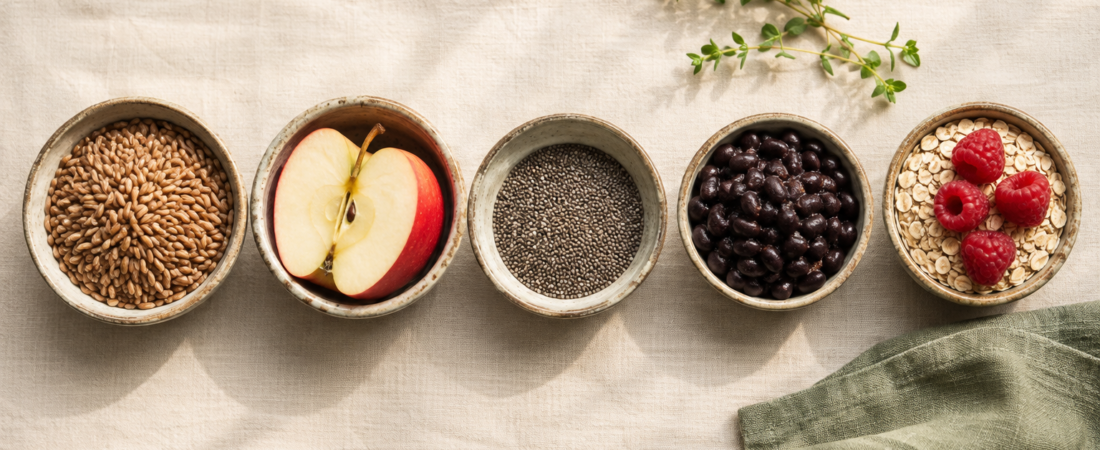
If you want easy ways to increase fiber intake, the short version is this: swap refined grains for whole ones, keep the skin on your produce, add a spoonful of chia or flax to something you already eat, snack on legumes instead of chips, and build every breakfast around at least one fiber source. Do those five things consistently and you’ll land close to the recommended 25-38 grams a day without ever “trying” a fiber diet.
Most fiber advice stops at “eat more vegetables,” which is true but useless. You already knew that. What nobody tells you is how much is enough, how fast to add it, and why going from 12 grams to 30 grams overnight will leave you gassy, bloated, and swearing off beans for a month.
Key Takeaways
- Daily target: Most adults need 25g (women) to 38g (men) of fiber per day, but the average American eats around 15g [NHANES data on average U.S. fiber intake].
- Go slow: Increase fiber by about 5g every few days, not all at once, to avoid bloating and gas.
- Water matters: Fiber needs fluid to work properly — without it, you can actually get more constipated, not less.
- Whole food beats supplements: Food-based fiber comes with water, prebiotics, and nutrients that powders don’t replicate.
- Breakfast is the easiest win: It’s the one meal most people eat the same way daily, which makes it the simplest place to build a fiber habit that sticks.
How Much Fiber Should I Eat Per Day?
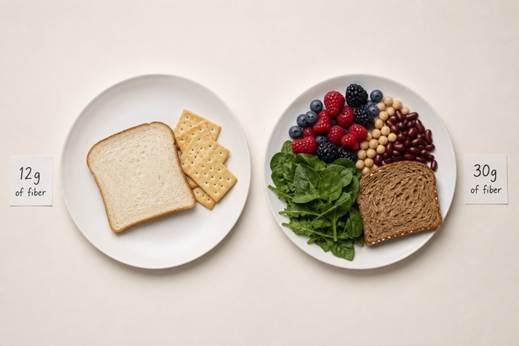
Here’s the number people actually search for: adult women should aim for about 25 grams of fiber a day, and adult men around 38 grams [Dietary Guidelines for Americans fiber recommendation]. That number drops slightly after age 50 for both groups. Most people in the US, UK, Canada, and Australia eat somewhere between 12 and 18 grams — roughly half of what they need [CITE: national dietary survey data on average fiber intake by country].
That gap is why “just eat more vegetables” feels so unsatisfying as advice. Doubling your fiber intake isn’t a tweak. It’s a real shift, and your gut bacteria need time to adjust to it — they literally have to build up the right populations to ferment all that extra fiber [Research on gut microbiome adaptation to increased fiber intake]. Jump too fast and you’ll deal with gas, cramping, and bloating that has nothing to do with fiber being “bad” for you and everything to do with pace.
A reasonable approach: add about 5 grams a day every few days until you hit your target. That’s roughly one extra piece of fruit, or a half-cup of beans, added every 3-4 days. Slow. Boring. It works.
Easy Ways to Increase Fiber Intake: 5 Swaps That Actually Stick
These are the five changes I’d tell a friend to make first — not because they’re the only ways to increase fiber intake, but because they require the least willpower and the least meal-planning.
1. Swap Refined Grains for Whole, Intact Ones
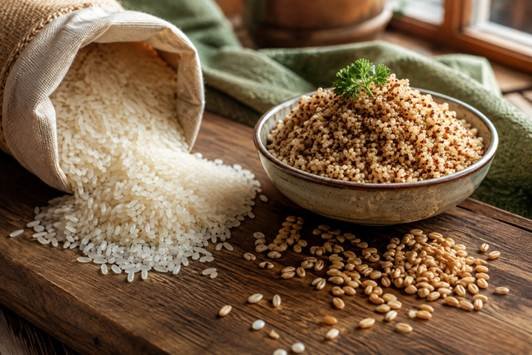
White bread, white rice, and regular pasta have had most of their fiber stripped out during processing. Swap them for whole-grain versions and you’re not changing your meal, just the base of it.
- White rice → farro, quinoa, or brown rice (roughly triples the fiber per serving) [USDA FoodData Central comparison of white rice vs. whole grain fiber content]
- Sandwich bread → look for “100% whole wheat” or “whole grain” as the first ingredient, not just “wheat bread,” which is often mostly white flour with coloring
- Regular pasta → chickpea or lentil pasta, which can have 2-3x the fiber and added protein
This is the laziest swap on the list because it doesn’t ask you to eat anything new. You’re still having rice with dinner. It’s just a different rice.
2. Keep the Skin On
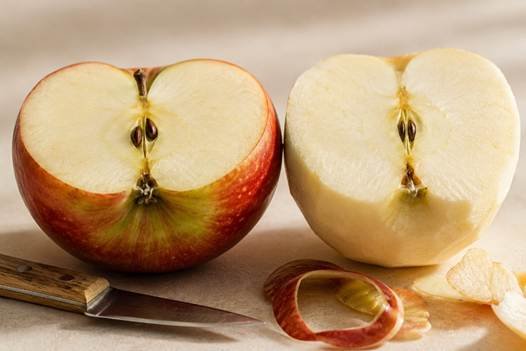
Peeling your apples, cucumbers, and potatoes strips out a big chunk of the fiber along with it. A medium apple with skin has close to 4.5 grams of fiber; peeled, it drops to about 2 [USDA nutrient data comparing apple with and without skin].
I know some people peel out of habit or texture preference, and that’s fine — but if you’re peeling because you think it’s “cleaner” or healthier, it’s actually working against you. Wash it well, skip the peeler, done.
3. Add a Fiber Booster to Something You Already Eat
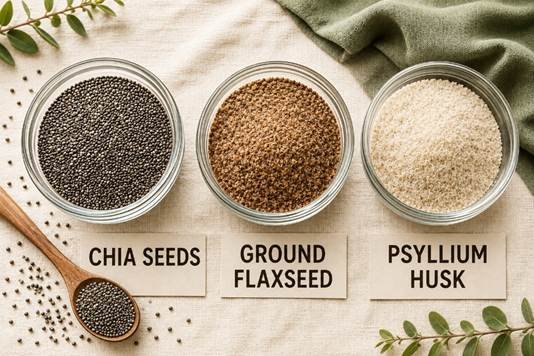
This is the “cheat code” of the list. Chia seeds, ground flaxseed, and psyllium husk are nearly flavorless, and you can stir them into yogurt, oatmeal, smoothies, or even soup without changing the taste much.
- 1 tablespoon of chia seeds: about 5 grams of fiber [USDA FoodData Central chia seed nutrient profile]
- 1 tablespoon of ground flaxseed: about 2 grams of fiber, plus omega-3s [Omega-3 and anti-inflammatory foods article]
- 1 tablespoon of psyllium husk: about 4-5 grams of fiber, and it also thickens liquids fast (add it slowly to avoid a gloopy texture)
Start with one teaspoon, not a heaping tablespoon. These fibers absorb a lot of water, and if you don’t drink enough alongside them, you can end up more backed up than before you started. That’s not a fiber failure — that’s a hydration failure wearing a fiber costume.
4. Snack on Legumes Instead of Processed Snacks
Beans, lentils, and chickpeas are some of the highest-fiber foods you can eat, and they’re cheap. Half a cup of black beans has about 7-8 grams of fiber [USDA nutrient data for black beans, cooked, half-cup serving] — more than most people get from an entire day of “eating healthy” snacks like granola bars or rice cakes.
Roasted chickpeas, a small bowl of edamame, hummus with veggies instead of chips — these aren’t exotic swaps, they’re just underused ones. If the idea of legumes as a snack feels weird, that’s a marketing problem, not a nutrition one. Every culture that eats a lot of beans doesn’t treat them as a “side dish only” food.
5. Build Breakfast Around Fiber First

Of all five, this is the one with the best return on effort, because breakfast is the meal most people eat on autopilot. If you fix the fiber content of that one meal, you’ve fixed it every single day without having to think about it again.
Simple Fiber-Rich Breakfast Ideas
Here’s what that actually looks like on a plate, not just in theory:
- Overnight oats with chia and berries — rolled oats, a tablespoon of chia seeds, and a half-cup of raspberries can hit 10-12 grams of fiber in one bowl [Combined USDA nutrient data for oats, chia seeds, and raspberries].
- Whole grain toast with avocado — swap white toast for whole grain, and half an avocado adds about 5 grams on its own [USDA nutrient data for avocado fiber content].
- Greek yogurt with flaxseed and sliced pear — pears are one of the higher-fiber fruits, skin on, around 5-6 grams each [USDA nutrient data for pear with skin].
- A smoothie with spinach, a frozen banana, and a tablespoon of chia — easy to drink on the way out the door, still counts.
- Two eggs with black beans and salsa — not sweet, but if you’re not a “sweet breakfast” person, this covers your fiber just as well.
None of these require a special grocery trip. That’s the point — the goal isn’t a “fiber diet,” it’s a slightly different version of the breakfast you already make.
Fiber-Rich Foods for Bloating Relief (And When Fiber Causes It Instead)
This is where the advice gets genuinely confusing, because fiber shows up on both sides of the bloating conversation — it’s blamed for causing it and recommended for relieving it, sometimes in the same article.
Here’s the actual distinction: soluble fiber dissolves in water and forms a gel-like substance, which tends to be gentler on digestion and can help ease both constipation and diarrhea. You’ll find it in oats, chia seeds, apples, and beans. Insoluble fiber doesn’t dissolve — it adds bulk and speeds things through your system, found in whole grains, nuts, and vegetable skins. Too much insoluble fiber too fast is usually what causes the bloating people complain about [Research comparing soluble vs. insoluble fiber effects on digestive symptoms].
If bloating is your main concern, lean toward soluble sources first — oats, chia, cooked (not raw) vegetables, and bananas — and add insoluble sources more gradually. And drink water. I can’t stress this enough: fiber without enough fluid is like adding sand to a pipe with no water pressure behind it.
If you have an existing digestive condition like IBS or IBD, talk to a doctor or registered dietitian before making major fiber changes, since some high-fiber foods can trigger symptoms in ways that don’t apply to the general population.
FAQ
How much fiber should I eat per day to see a difference?
Most adults need 25-38 grams daily, and you’ll typically notice more regular digestion within a week or two of consistent intake [Clinical guidance on fiber intake and bowel regularity timeline]. Bigger benefits, like improved cholesterol markers, tend to show up over months, not days.
Can too much fiber be bad for you?
Yes — going well above your needs quickly, especially without enough water, can cause bloating, gas, and even nutrient absorption issues in extreme. More isn’t automatically better; consistent and gradual is what actually works.
What’s the fastest way to increase fiber intake without bloating?
Add fiber gradually — about 5 grams every few days — and increase your water intake alongside it. Starting with soluble fiber sources like oats and chia tends to cause less gas than jumping straight to raw vegetables or bran.
Are fiber supplements as good as fiber from food?
They can help close a gap, but whole foods bring along water content, prebiotic compounds, and other nutrients that isolated fiber supplements don’t replicate. Use supplements as backup, not your main strategy.
What foods are highest in fiber?
Legumes (beans, lentils, chickpeas), chia and flax seeds, raspberries and pears, whole grains like oats and quinoa, and vegetables like broccoli and Brussels sprouts are among the highest-fiber, most accessible options.